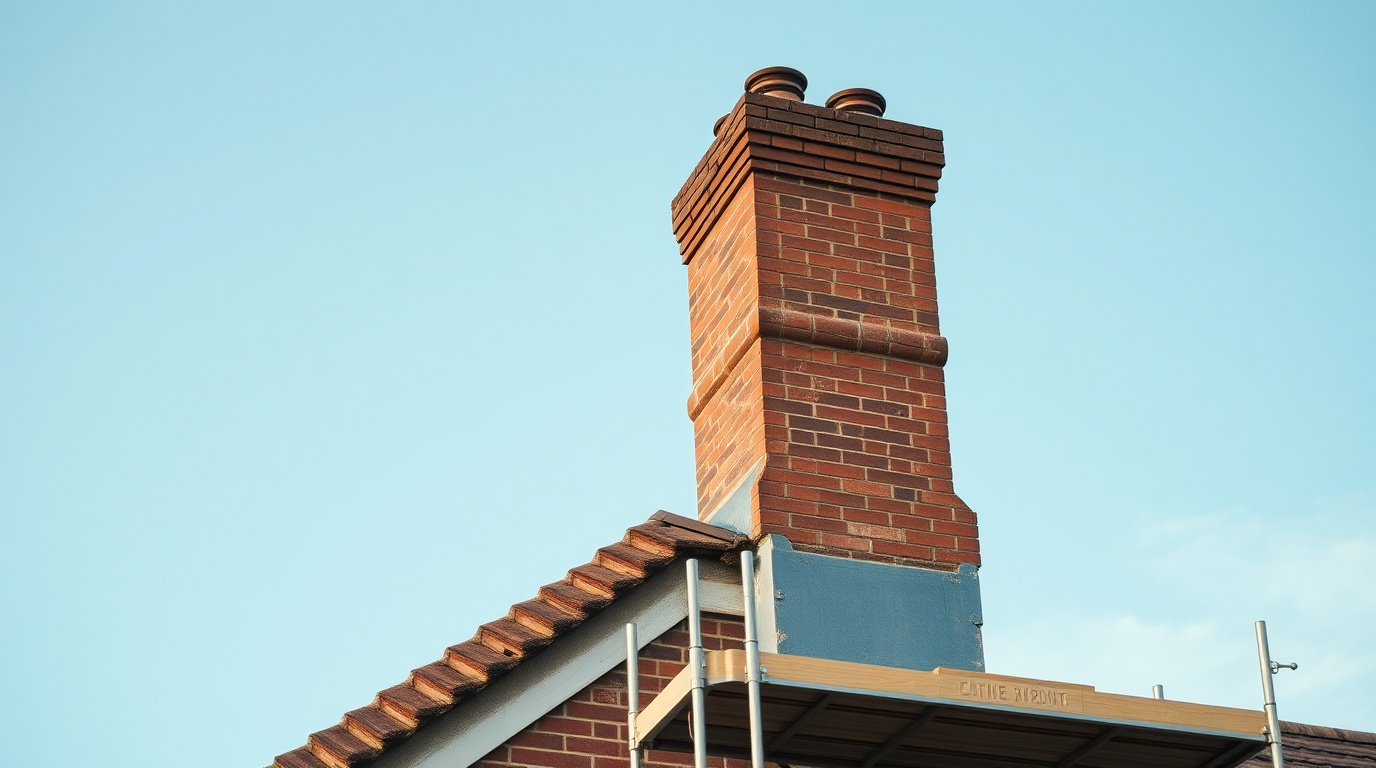
The short answer
Some chimney repairs can be done without full scaffolding, using alternatives such as a scaffold tower, a cherry picker (MEWP), or a roof access platform — but it depends on the job, the roof and the risk. Minor tasks like inspections, fitting a cowl, or a small flashing patch may be possible from a lighter platform. Major masonry — repointing, crown recasts, full flashing renewal, and rebuilds — usually still needs scaffolding, because they involve sustained, two-handed work at height where a stable, surrounding platform is the safe option. The decision is governed by the Work at Height Regulations 2005 and should be made by a competent contractor on safety grounds, not just to cut cost.
Avoiding scaffolding can save money, but only where it is genuinely safe. The honest answer is that it depends on the job — here is when alternatives work and when they do not.
At a glance
- Possible withoutinspection, cowl, minor patch
- Alternativestower, MEWP, roof platform
- Usually needs scaffoldrepoint, recast, rebuild
- Decided bysafety + Work at Height Regs
- Never acceptablemajor work from a ladder
Jobs that may not need full scaffolding
Not every chimney job requires a full scaffold. Brief and light tasks — an inspection, fitting a cowl or birdguard, a small flashing repair, or a quick crown patch — can sometimes be carried out from a lighter platform if the roof height and pitch allow it to be done safely. The deciding factors are how long the person must be up there, how much they must move around the stack, and the height and pitch of the roof. The table below shows which jobs are more amenable to a non-scaffold approach, but it is a guide only: a steep or tall roof can push even a small job towards scaffolding for safety. The key is that a competent contractor judges this for your specific property.
| Job | Scaffold-free option? | Notes |
|---|---|---|
| Inspection | Often yes | tower or roof ladder |
| Fit cowl / birdguard | Sometimes | if roof not too high/steep |
| Minor flashing patch | Sometimes | MEWP or tower may suit |
| Repointing | Usually no | sustained work, needs platform |
| Crown recast | Usually no | working around the stack |
| Rebuild | No | days of masonry at height |
Indicative guidance only. Suitability depends on the roof, the job and the contractor's risk assessment.
The alternatives, and their limits
Several access methods can stand in for a scaffold on the right job. A scaffold tower is a free-standing mobile platform that suits short tasks at moderate height, but it must be erected on firm, level ground and is less suited to working out over a sloping roof. A cherry picker or mobile elevating work platform (MEWP) can lift a worker to the stack quickly without erecting anything, which is useful for short jobs, but it needs access and standing space for the machine, which many terraced or garden-locked properties lack. A roof access platform or secured roof ladder can serve a brief inspection. Each has real limits: none gives the all-round, stable, materials-to-hand working environment that scaffolding provides for sustained masonry. So while alternatives genuinely avoid scaffolding for some jobs, they are not a universal substitute, and trying to use them for major work is a false economy.
Why major repairs still need scaffolding
For repointing, crown recasts, full flashing renewal and rebuilds, scaffolding usually remains the correct choice, and it is worth understanding why rather than viewing it as an avoidable cost. These jobs involve hours or days of two-handed work, moving around the stack, with mortar, bricks and tools that need a stable place to rest. A scaffold provides a continuous, guarded working platform that lets the tradesperson work safely and produce good masonry. Attempting the same from a tower perched to one side, or worse a ladder, compromises both safety and quality — rushed, awkwardly placed work tends to fail sooner. The Work at Height Regulations 2005 set a hierarchy that favours a safe working platform for exactly this kind of sustained task. So the honest answer to "can I avoid the scaffold?" for a rebuild is: not safely, and not without risking poorer work.
Getting it right and keeping costs sensible
The sensible approach is to match the access to the job rather than chase the lowest price. For a small, brief task, ask whether a tower or MEWP is suitable and safe — there is no need to pay for a full scaffold to fit one cowl on a modest roof. For major masonry, accept that scaffolding is part of doing it properly, and instead get value by bundling jobs so the scaffold serves several repairs at once. Be cautious of any contractor who offers to do substantial work from a ladder to undercut others; it is neither safe nor compliant, and the saving is not worth the risk or the likelihood of poor, short-lived work. If a contractor proposes a non-scaffold method, it is reasonable to ask how it keeps the work safe and whether it suits the full scope. The right access is the one that lets the job be done safely and well.
One practical point that often settles the question is whether the alternative access can physically reach the stack. A cherry picker or MEWP needs firm, level standing space and a clear path to the chimney, which many terraced, mid-row or garden-locked homes simply do not have; a scaffold tower needs solid ground and is awkward to use out over a sloping roof. So even where a job is, in principle, light enough to avoid a full scaffold, the site itself may rule the alternatives out and make scaffolding the only safe and practical choice. The honest way to approach it is to let a competent contractor assess your specific roof and surroundings, then match the access to the job: a tower or MEWP for a quick, reachable task, and scaffolding where the work is sustained or the site leaves no room for anything else. Chasing a non-scaffold method that does not fit the property is a false economy that usually ends in compromised, unsafe work.
Frequently asked questions
Can repointing be done without scaffolding?
Usually not. Repointing is sustained, two-handed work around the stack, so it normally needs a stable scaffold platform for safety and to produce good masonry. A quick patch might be reachable another way, but a full repoint generally requires scaffolding.
Is a cherry picker cheaper than scaffolding for chimney work?
It can be for a short job, since nothing is erected, but it only works if the machine can physically reach and stand near the stack. Many terraced or garden-locked homes have no space, so scaffolding is often the only practical option.
Is it safe to repair a chimney from a ladder?
A ladder is acceptable only for a brief look, not for masonry work. Repointing, recasting or rebuilding from a ladder is unsafe and outside the work-at-height hierarchy. Sustained work needs a proper platform such as a tower or scaffold.
Sources & further reading
- HSE — Work at Height Regulations 2005
- Checkatrade — scaffolding cost guide
- MyJobQuote — scaffolding alternatives and cost
Figures on this page are typical UK ranges drawn from published sources and depend on your specific chimney. They are guidance, not a quotation.