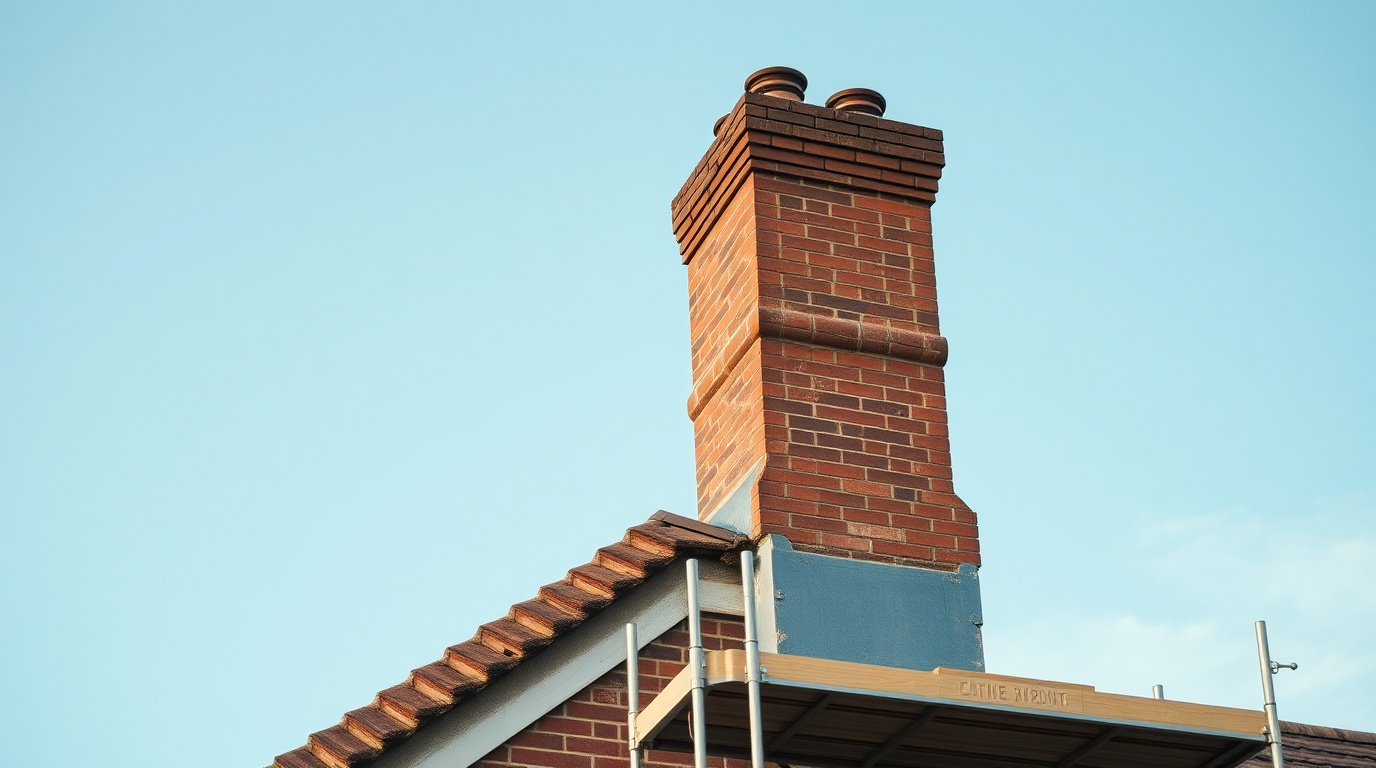
The short answer
The common signs a chimney needs repair are crumbling mortar between the bricks (which points to repointing), spalling brick where the faces are flaking off through frost and damp, a visibly leaning or bowed stack, missing or damaged flashing where the chimney meets the roof, white staining (efflorescence) showing moisture moving through the masonry, and damp, mould or a musty smell around the fireplace or on upper walls. Finding bits of brick, mortar or tile in the fireplace or on the roof is another sign the stack is breaking down. Most of these let water reach the brickwork or the roof, so catching them early usually keeps the job to repointing or flashing rather than a full rebuild.
Chimney problems usually show on the outside before they cause damage inside. Knowing what each sign points to helps you act while it is still a small repair rather than a structural one.
What to look for
- Crumbling mortarneeds repointing
- Spalling / flaking brickfrost & damp damage
- Leaning stackpossible rebuild
- Missing flashingwater getting in at the roof
- White staining / damp insidemoisture in the masonry
Signs at the chimney itself
- Crumbling mortar: open or eroded joints between the bricks are the classic sign a stack needs repointing.
- Spalling brick: brick faces flaking or breaking off, caused by water soaking in and freezing — left long enough it weakens the stack.
- Leaning or bowed stack: any visible lean is a structural warning and usually points towards a rebuild.
- Missing or damaged flashing: the lead where the stack meets the roof seals out water; gaps or lifting lead let it straight in.
- Debris below: bits of brick, mortar or pot in the fireplace or on the roof mean the stack is breaking down.
Signs inside the house
Damage often shows indoors before you spot it on the stack. White staining (efflorescence) on chimney brickwork shows moisture is tracking through the masonry. Damp patches, mould or a musty smell around the fireplace or on upper walls and chimney breasts usually mean water is getting in — frequently through failed flashing or open mortar joints. Because the cause is often at the stack, an inspection from a safe access platform is the way to confirm what is letting the water in.
Frequently asked questions
What are the signs a chimney needs repointing?
Crumbling or open mortar joints between the bricks are the main sign. You may also see spalling brick faces and white staining, all of which mean water is getting into the masonry through the failing mortar.
Is a leaning chimney dangerous?
A visibly leaning or bowed stack is a structural warning sign and should be inspected promptly, as it usually points towards a rebuild rather than a simple repointing. Have it checked from a safe access platform.
Why is there damp around my fireplace?
Damp, mould or a musty smell around a fireplace or chimney breast usually means water is getting in — often through failed flashing or open mortar joints at the stack. An inspection confirms the source.
Sources & further reading
Figures on this page are typical UK ranges drawn from published sources and depend on your specific chimney. They are guidance, not a quotation.