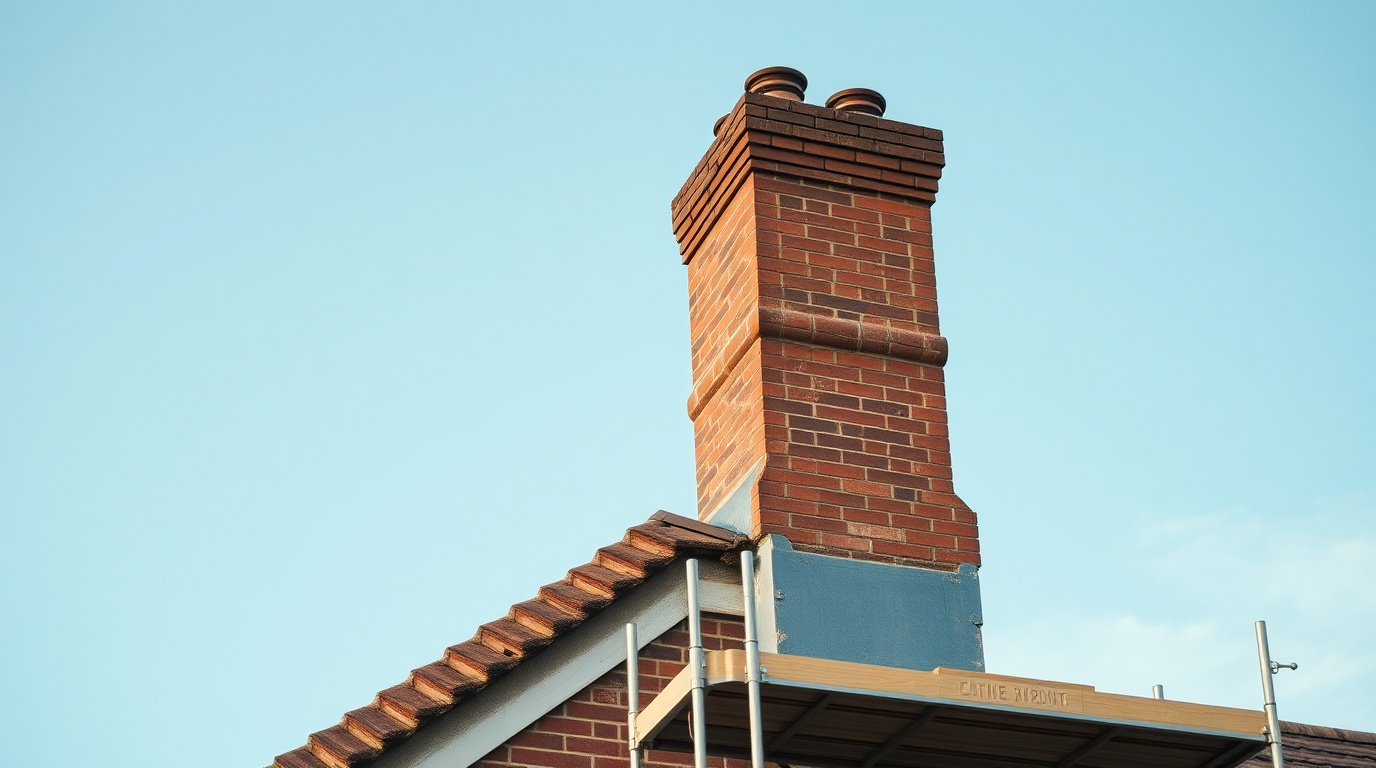
The short answer
Chimney crown repair in the UK — repairing or recasting the flaunching, the sloped mortar cap on top of the stack that holds the pots and sheds rainwater — typically costs in the low-to-mid hundreds of pounds for the work itself. As with all chimney jobs, access adds to the total: scaffolding or a tower to reach the top of the stack safely can add a few hundred pounds. The price depends on whether the crown is patched or fully recast, the number of pots, the stack's height and condition, and your region. Because a cracked crown lets water into the masonry, repairing it early is cheaper than the frost damage it otherwise causes.
The crown (flaunching) is the mortar cap on top of the stack. It is small, but when it cracks, water gets in — so this modest repair prevents much larger ones.
At a glance
- Crown repair / recastlow-to-mid hundreds
- Access add-ona few hundred pounds
- What it doessheds water, holds pots
- Risk if ignoredfrost damage, leaks
- Bundle it withrepointing, cowl, flashing
What crown repair typically costs
The crown — often called the flaunching — is the sloped band of mortar on top of the chimney stack. It does two jobs: it holds the pots in place and it sheds rainwater off the top of the stack so water runs clear rather than soaking down into the brickwork. Over years of weather and frost it cracks, crumbles or pulls away from the pots, at which point water gets in. Repair means patching small cracks or, more usually on a weathered stack, recasting the whole crown in fresh mortar. The ranges below are indicative guidance from established UK cost guides, not fixed quotes. Crown repair is one of the cheaper chimney jobs, but neglecting it is a common cause of far more expensive damage.
| Job | Typical UK range | Notes |
|---|---|---|
| Patch / repair small cracks | low hundreds | minor, crown otherwise sound |
| Recast crown (flaunching) | low-to-mid hundreds | full mortar cap renewed |
| Scaffolding / access | a few hundred pounds | to reach top of stack |
| With pot refit / cowl | added cost | often done together |
Indicative ranges for guidance only. Sources: Checkatrade and MyJobQuote chimney cost guides.
Why the crown matters so much
For such a small feature, the crown has an outsized effect on a chimney's health. When it is sound, it keeps the top of the stack and the joints just below it dry. When it cracks, rainwater seeps into the masonry, and in winter that water freezes and expands, prising the brickwork apart — the same frost action that destroys failed pointing. Water getting past a broken crown can also track down inside the flue, causing damp on the chimney breast indoors, and a crumbling crown may let a pot work loose, which is a falling hazard. Because the consequences (frost-damaged brickwork, leaks, a rebuild) are far more costly than the repair, recasting a failing crown is one of the most cost-effective pieces of chimney maintenance you can do. It is exactly the kind of job that should be caught at an inspection before it escalates.
Access and bundling
Like every chimney repair, the crown sits at the top of the stack, so access is a large part of the cost. A recast may be reachable from a tower on a low, easy roof, but a taller or steeper property usually needs scaffolding, chosen on safety grounds under the Work at Height Regulations 2005. Because that access cost is largely fixed, crown repair is much better value when combined with other stack work while the platform is up — repointing, refitting pots, fitting a cowl, or renewing flashing. A contractor recasting a crown is right at the top of the stack and well placed to spot and quote for these at the same time. If your crown needs attention, it is worth asking what else is due, since paying once for access and doing several jobs is far cheaper than repeated visits.
Comparing crown repair quotes
To get the work priced up fairly, confirm each one describes the same scope — a small patch and a full recast are different jobs and different prices. A clear quote should state whether the crown is being patched or fully recast, name the mortar (lime where the building requires it), and separate labour, materials and access. Check whether VAT and scaffolding are included. Get two or three quotes, and if any other stack work is needed, ask for it to be priced together. Be cautious of a very low figure that may be a quick smear of mortar rather than a properly formed, sloped crown that will actually shed water for years. Because the whole point of the crown is to keep water out of the stack, a durable recast is worth more than a cheap patch that fails the following winter.
Finally, it helps to know what a properly recast crown should look like, so you can judge the work rather than just the price. A good crown is a sloped, well-formed cap that throws water clear of the brickwork below, ideally with a slight overhang or drip so rain does not run straight down the face of the stack, and it should be firmly bedded around the pots without gaps. A poor job is a thin, flat smear of mortar that holds water and cracks again within a winter or two. Because the crown's entire purpose is to shed water, the slope and the finish matter as much as the material. If the existing pots are sound they can usually be re-bedded into the new crown; if they are cracked, replacing them at the same time, while the access is up, avoids paying twice. Asking the contractor how they will form the slope and finish the edge is a fair and revealing question.
Frequently asked questions
What is the chimney crown or flaunching?
It is the sloped mortar cap on top of the chimney stack. It holds the pots in place and sheds rainwater off the top so water does not soak into the brickwork. When it cracks, water gets in and frost damage follows.
What happens if I don't repair a cracked chimney crown?
Water enters the masonry through the cracks, then freezes and expands in winter, gradually breaking up the brickwork. It can also cause damp indoors and let pots work loose. The eventual repairs, such as a rebuild, cost far more than recasting the crown.
Can a chimney crown be repaired from a ladder?
Sometimes a minor patch on a low, easy roof can be reached from a tower or roof ladder. A full recast, or any work on a tall or steep stack, normally needs scaffolding so it can be done safely under work-at-height rules.
Sources & further reading
- Checkatrade — chimney repair cost guide
- MyJobQuote — chimney repair cost guide
- HomeOwners Alliance — roof repair costs
Figures on this page are typical UK ranges drawn from published sources and depend on your specific chimney. They are guidance, not a quotation.