The short answer
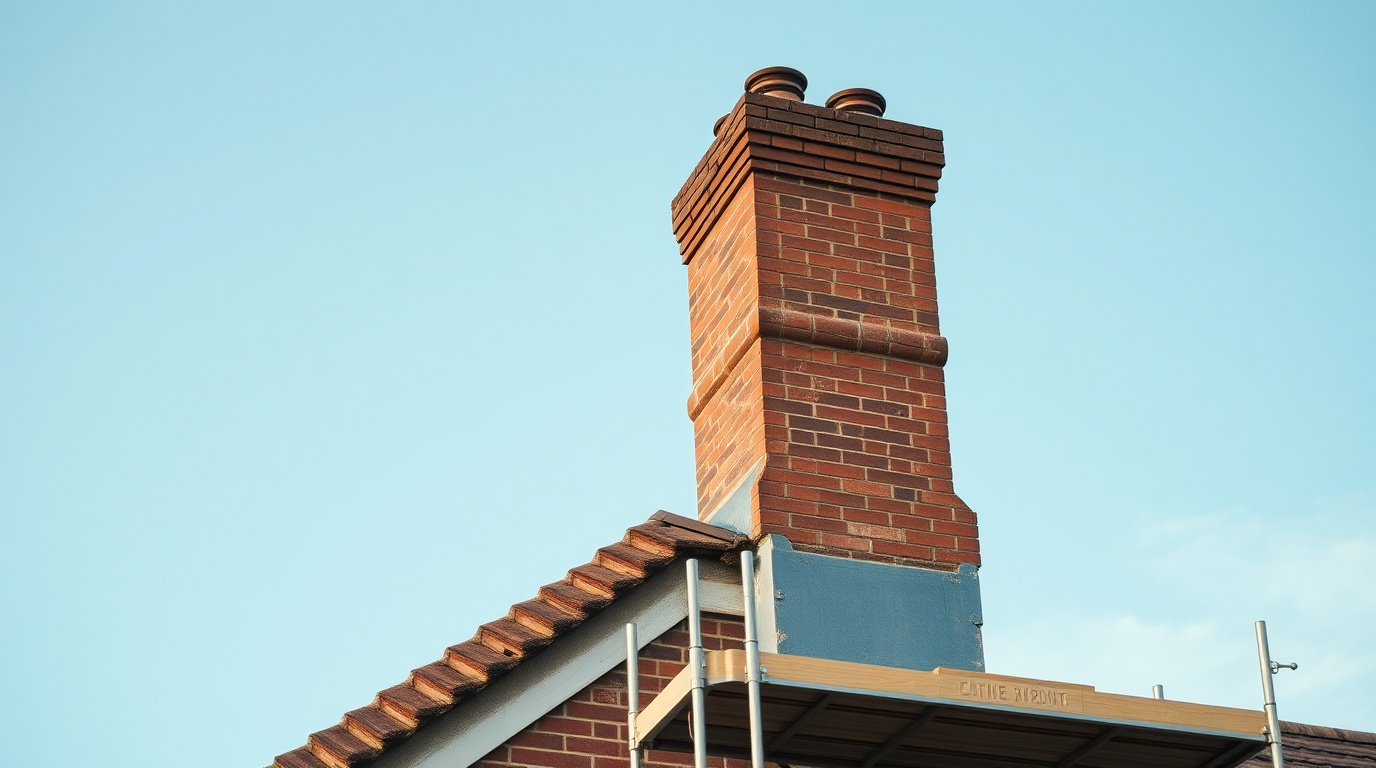
Chimney flashing is the weatherproofing at the junction where the chimney passes through the roof. In the UK it is most often formed in lead, and a complete system includes apron flashing at the front, step flashings up the sides, a back gutter behind the stack, and cover or soakers dressed over the roof covering, with the upper edges chased into the mortar joints and pointed. Flashing needs replacing or repairing when it cracks, splits, lifts, or pulls out of the joints, when the pointing holding it has failed, or when old narrow lengths have suffered thermal fatigue. Failed flashing is one of the most common causes of damp on the chimney breast, so it is worth checking when interior damp appears near a chimney.
Flashing does the unglamorous but vital job of keeping water out at the roof junction. Here is how it works and when it fails.
Chimney flashing
- Materialusually lead
- Partsapron, step, back gutter, soakers
- Fixed bychasing into mortar + pointing
- Fails bycracks, lifting, lost pointing
- Common symptomdamp on chimney breast
What flashing is and its parts
Where a chimney rises through the roof, there is a gap all around it that water would otherwise run into. Flashing closes that gap. A traditional lead system is made of several elements working together: an apron (front) flashing on the downhill side, step flashings cut to follow the courses up each side, a back gutter behind the stack to carry water around it, and soakers or cover flashings dressed over the tiles or slates. The top edges are chased (cut) into the mortar joints of the chimney and held with lead wedges and pointing. Done properly, this layered arrangement sheds water down onto the roof and keeps the junction dry.
Signs flashing has failed
The clearest sign of failed flashing is damp appearing on the chimney breast inside — staining or a tide-mark on the wall or ceiling near the stack, especially after heavy rain. Up on the roof, look for cracked or split lead, lengths that have lifted or slipped, mortar joints that have failed so the flashing has pulled out, or signs of previous patch-ups with flashing tape or mastic that have given up. Older lead made in over-long pieces can suffer thermal fatigue, where repeated expansion and contraction causes splits. Any of these lets water track into the building.
| Sign | What it means |
|---|---|
| Damp on chimney breast inside | Water entering at the junction |
| Cracked or split lead | Material failure — replace section |
| Lifted or slipped flashing | Fixing or pointing failed |
| Mortar pulled out of joints | Flashing no longer held in |
| Old tape or mastic patches | Temporary fix that has failed |
Indicative; confirm by inspection. General guidance only.
Repair or replace?
Whether you repair or replace depends on the condition. If the lead itself is sound but the pointing has failed, re-dressing the flashing back into re-cut joints and re-pointing may be enough. If the lead is cracked, fatigued or has been repeatedly patched, full replacement in new lead — properly sized lengths with laps, correctly chased and pointed — is the durable answer. Avoid relying on self-adhesive flashing tape or mastic as a long-term fix; they are at best a temporary measure. Because flashing involves working at height on the roof, it is normally a job for a roofer or chimney specialist with proper access.
Frequently asked questions
Why is my chimney breast damp inside?
Damp on a chimney breast is frequently caused by failed flashing letting rain into the roof junction. Other causes include failed pointing or a missing pot cover, so the route the water takes should be identified before repair.
Can I just use flashing tape to fix it?
Self-adhesive flashing tape or mastic is at best a temporary patch. It tends to lift and fail over time. The durable fix is to re-dress sound lead into re-pointed joints or replace failed lead with correctly sized new lead.
How long does lead flashing last?
Well-installed lead flashing can last many decades. Failure usually comes from poor original sizing causing thermal fatigue, lost pointing, or earlier patch repairs, rather than the lead simply wearing out quickly.
Sources & further reading
- Lead Sheet Training Academy — lead flashing guidance
- gov.uk — Approved Document C (resistance to moisture)
Figures on this page are typical UK ranges drawn from published sources and depend on your specific chimney. They are guidance, not a quotation.