The short answer
Chimney flashing repair in the UK typically costs in the low-to-mid hundreds of pounds for the work itself, with the total shaped by access and the extent of the job. A small repair — re-sealing or re-dressing a section of lead flashing — sits at the lower end, while fully renewing the flashing around a stack with new lead costs more. As with all chimney work, reaching the roof safely usually means scaffolding or a tower, which can add a few hundred pounds. The price also depends on the roof type and pitch, the quality of lead used, and your region, with London and the South East generally dearer.
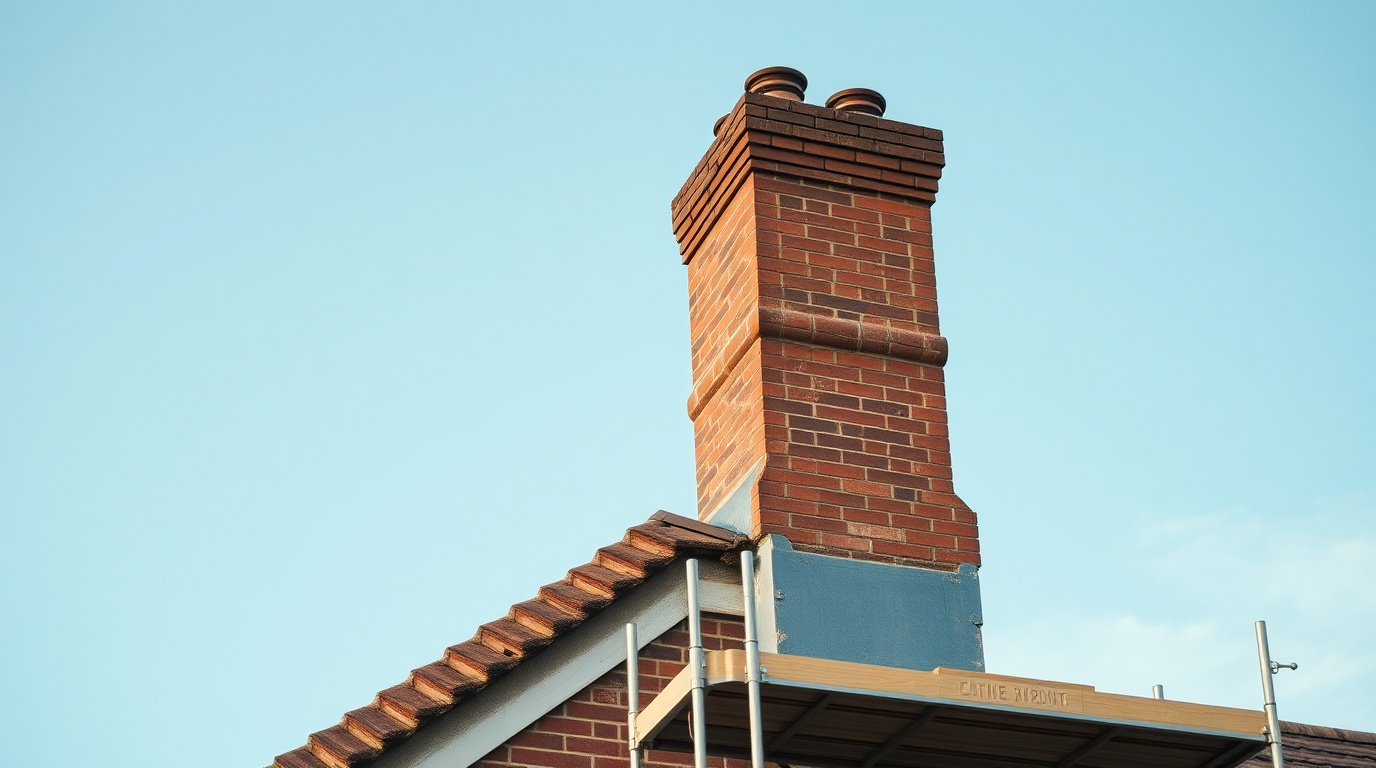
Flashing is the weatherproof seal where the chimney meets the roof, and the most common source of chimney leaks. Repairs are not large, but access and lead work drive the cost.
At a glance
- Minor flashing repairlow hundreds
- Full flashing renewallow-to-mid hundreds
- Access add-ona few hundred pounds
- Material to ask forlead (code-graded)
- Driversroof type, extent, region
What flashing repair typically costs
Flashing is the metal weatherproofing — almost always lead in the UK — that seals the junction where the chimney passes through the roof. Because that junction takes a lot of weather and movement, it is the most common source of chimney leaks, often showing up as damp patches on the ceiling below. Repair cost depends on whether you are patching and re-dressing an existing section or fully renewing the flashing with new lead. The ranges below are indicative guidance from established UK cost guides, not fixed quotes. Catching a flashing problem early is worthwhile, because a small leak left alone rots roof timbers and damages plaster, costing far more than the flashing repair itself.
Flashing around a stack is made up of several parts — the front apron, the step flashing up each side, the back gutter behind the stack, and the soakers that interleave with the tiles or slates. A repair may only need one of these renewing, which keeps the cost down, or the whole set may have reached the end of its life together. A contractor should tell you which elements they are pricing for, because "renew the flashing" can mean anything from re-pointing a lifted lead edge to stripping and re-forming the complete weatherproofing around the stack. That distinction is often the reason two quotes differ.
| Job | Typical UK range | Notes |
|---|---|---|
| Re-seal / re-point flashing | low hundreds | minor, existing lead reused |
| Re-dress section of lead | low hundreds | lifted or slipped flashing |
| Full flashing renewal | low-to-mid hundreds | new lead all round stack |
| Scaffolding / access | a few hundred pounds | for safe roof access |
Indicative ranges for guidance only. Sources: Checkatrade and MyJobQuote flashing cost guides.
Why lead and roof type matter
Good flashing is made from lead graded by code (thickness), dressed into the roof and into a raked-out mortar joint (a chase) on the chimney, then pointed in. Proper lead work is a skilled trade, and quality matters: thin or poorly dressed flashing fails quickly, while well-laid lead can last for decades. Cheaper alternatives such as flashing tape or self-adhesive strips exist and cost less, but they are generally a short-term fix and not a substitute for dressed lead on a permanent repair. Roof type and pitch affect the price too: a steep roof, an awkward valley, or a stack set well up the slope is harder and slower to flash than a simple low-pitch junction. When comparing quotes, it is worth asking what material and lead code the contractor will use, because a low price achieved with tape rather than dressed lead is not the same job.
Access and bundling with other stack work
As with every chimney job, access is a major part of the cost. Flashing sits at the roof-to-stack junction, so reaching it safely usually needs scaffolding or, for a small repair, a tower — chosen on safety grounds under the Work at Height Regulations 2005, not just price. Because that access cost is broadly fixed, flashing repair is far better value if combined with any other stack work that is due. If the chimney also needs repointing, a recast crown, or a new cowl, having it all done while the scaffold is up shares the costly access across several jobs. A contractor up on the roof to renew flashing is well placed to spot and quote for these at the same time, which is usually cheaper than separate return visits.
Reading a flashing quote
To compare flashing quotes fairly, check that each one describes the same scope and the same material. A clear quote should state whether the flashing is being repaired or fully renewed, what lead grade is used (or whether a cheaper tape is proposed), and should separate labour, materials and access. Confirm whether VAT and scaffolding are included, because a figure that looks low often excludes one of them. Get two or three quotes, and treat a very cheap one with caution — it may be a temporary tape fix rather than dressed lead. Ask whether the work carries a guarantee, since flashing failures are a leading cause of roof leaks and you want a repair that genuinely keeps water out. Because the damage from a failed seal (rotten timber, ruined plaster) far exceeds the repair cost, durability is the thing to prioritise here.
It is also worth knowing how to tell flashing failure from other leak causes, because the fix and the cost differ. A flashing problem typically shows as damp tracking down beside the chimney breast or staining on the ceiling close to the stack, often appearing after wind-driven rain. A failed crown or perished pointing tends to show damp higher up or inside the flue; a cracked pot or missing cowl lets rain straight down the chimney. A contractor up on the roof should be able to distinguish these and tell you whether you genuinely need flashing work or whether the real culprit is elsewhere — which protects you from paying to renew sound flashing while the actual leak continues. Because the access is the same for all of them, having any related stack defect dealt with on the one visit is the sensible, economical approach rather than discovering a second cause after the scaffold has come down.
Frequently asked questions
Why does my chimney leak even though the brickwork looks fine?
Most chimney leaks come from failed flashing, the lead seal where the stack meets the roof, not the brickwork. Over time the lead slips, the pointing holding it fails, or a cheap tape repair lifts, letting water track into the roof below.
Is lead flashing better than flashing tape?
Yes, for a lasting repair. Dressed lead pointed into a raked joint can last for decades, whereas self-adhesive flashing tape is generally a short-term stopgap that lifts and fails sooner. Tape can buy time but is not a permanent substitute.
Can flashing be repaired without scaffolding?
Small flashing repairs can sometimes be done from a tower or roof ladder, which is cheaper than full scaffolding. The contractor chooses access on safety grounds, so a steep or high roof, or a larger renewal, will usually need a scaffold.
Sources & further reading
- Checkatrade — chimney flashing cost guide
- MyJobQuote — roof flashing cost guide
- Lead Sheet Training Academy — lead flashing guidance
Figures on this page are typical UK ranges drawn from published sources and depend on your specific chimney. They are guidance, not a quotation.