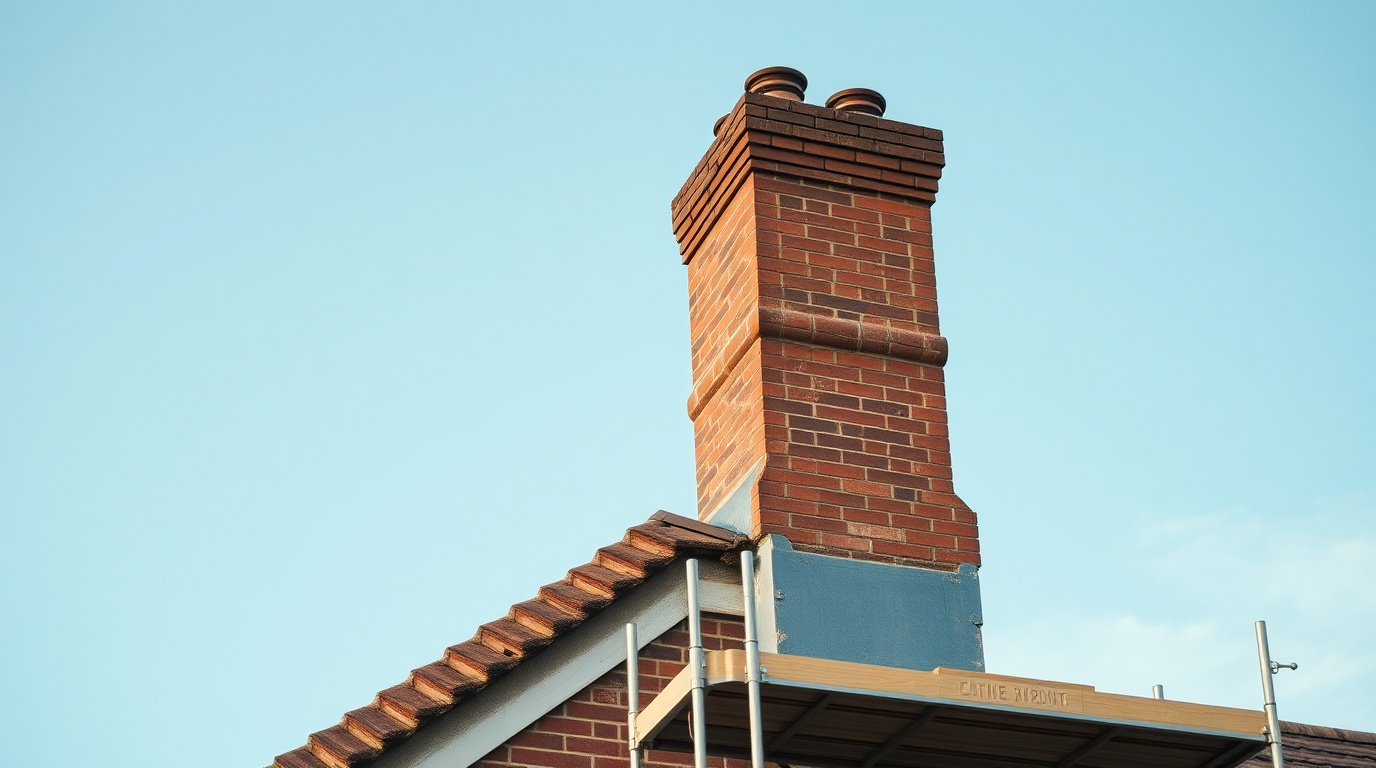
The short answer
Replacing a chimney pot means safely removing the old pot from the top of the stack and bedding a new one in place. In outline, the work involves safe roof access (usually a scaffold or tower), breaking out the old flaunching — the mortar fillet that holds the pot and sheds water off the stack top — lifting out the damaged pot, fitting a matching new pot, and forming fresh flaunching with a suitable mortar, sloped to drain. A pot needs replacing when it is cracked, broken, loose, leaning or has lost pieces. Because it is work at the highest point of the building, it is normally a job for a roofer or chimney specialist with proper access rather than a ladder, both for safety and to get the flaunching right.
A chimney pot replacement is a common repair, but the access and the flaunching are what make it a professional job. Here is the process.
Pot replacement
- Accessscaffold or tower, not a ladder
- Holds the potmortar flaunching
- Replace whencracked, loose or leaning
- Matchsize, height and style
- Optional add-oncowl or bird guard
What holds a chimney pot
A chimney pot sits on top of the stack and is held in place by the flaunching — a sloping fillet of mortar around the base of the pot that both grips the pot and sheds rainwater off the top of the stack so it does not soak into the masonry. When flaunching cracks or crumbles, the pot becomes loose and water gets into the stack, which can lead to damp and frost damage below. So pot replacement and flaunching go together: a new pot needs fresh, well-formed flaunching, and sometimes the flaunching alone needs renewing even when the pot is sound.
How the replacement is done
The work follows a clear sequence. First, safe access is set up — typically a scaffold or chimney scaffold, because the top of a stack is no place for ladder work. The old flaunching is broken out and the damaged pot lifted clear (pots are heavy and awkward, so this is done carefully). A matching new pot is positioned, then new flaunching is formed around its base with a suitable mortar, sloped away from the pot to drain. If wanted, a cowl or bird guard can be fitted to the new pot at the same time. The new flaunching is left to cure before the stack is back in normal use.
| Step | What happens |
|---|---|
| Access | Scaffold or tower erected |
| Remove flaunching | Old mortar broken out |
| Lift out old pot | Damaged pot removed safely |
| Fit new pot | Matching pot positioned |
| Form flaunching | New sloped mortar fillet |
Indicative sequence; details vary by stack. General guidance only.
When a pot needs replacing and choosing one
Replace a pot when it is cracked, chipped, broken, leaning or loose, or where pieces have fallen — a failing pot can shed pieces onto the roof or ground. When choosing a replacement, match the existing as far as possible: the right diameter and height matter for the flue to draw properly, and matching the style and colour keeps the roofline consistent, which is particularly important on period or listed properties (where consent may be needed before changing pots). On a listed building, reuse the original pot if it can be saved. Because the job combines height, weight and the need for sound flaunching, it is best left to a roofer or chimney specialist.
Frequently asked questions
When does a chimney pot need replacing?
Replace a pot when it is cracked, broken, chipped, leaning or loose, or has shed pieces. A failing pot can drop fragments and lets water into the stack through failed flaunching, so it is renewed along with the mortar fillet.
What is flaunching on a chimney?
Flaunching is the sloping mortar fillet around the base of the pot on top of the stack. It holds the pot in place and sheds rainwater off the stack top. When it cracks, the pot loosens and water gets into the masonry.
Do I need permission to change a chimney pot?
On an ordinary house, replacing a pot like-for-like is maintenance and needs no permission. On a listed building, changing or removing original pots can need listed building consent, so check with the conservation officer first.
Sources & further reading
Figures on this page are typical UK ranges drawn from published sources and depend on your specific chimney. They are guidance, not a quotation.