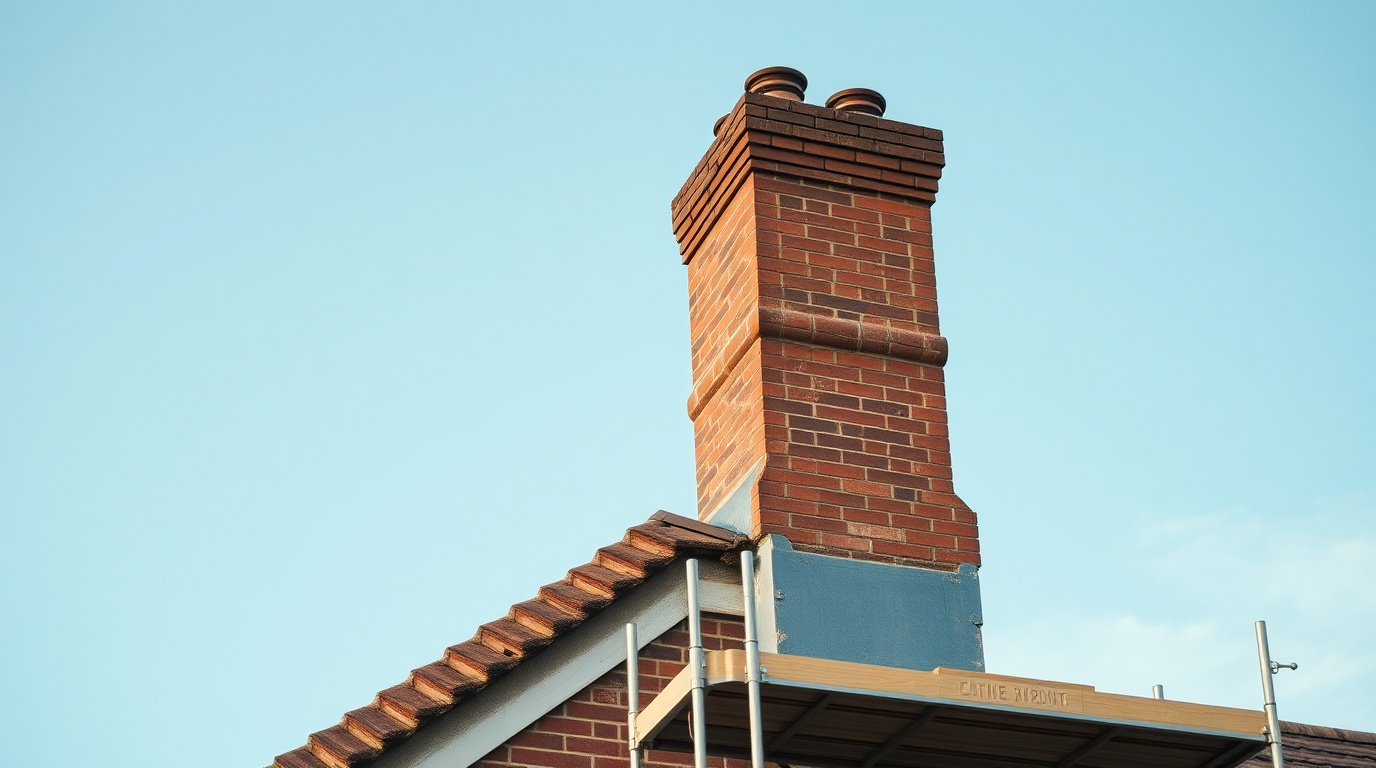
The short answer
Yes — removing a chimney breast or stack normally needs building control approval, because it is structural work under the Building Regulations. A chimney carries weight, and taking part of it out affects the loads in the wall and roof, so the remaining structure must be properly supported and made good. This is usually achieved with gallows brackets or steelwork to carry any chimney left above, designed where needed by a structural engineer. You can apply through a building notice or a full plans application to your local authority building control, and the work is inspected before sign-off. If the chimney is on a party wall, the Party Wall etc. Act 1996 usually applies as well.
A chimney is part of the building's structure, so its removal is controlled work. Here is what building control will be looking for.
Removal and building control
- Approval neededyes — structural
- Common supportgallows brackets or steel
- Applicationbuilding notice or full plans
- Inspectionbefore sign-off
- Party wallif stack is shared
Why approval is required
A chimney breast and stack are load-bearing parts of the building — they are built into the wall and the stack adds weight at roof level. Removing them is a material alteration to the structure, which makes it controlled work under the Building Regulations. The key concern is Part A (structure): whatever is left must be adequately supported, and the floors, walls and roof affected must remain sound. Because of this, building control involvement is expected. Removing a chimney without approval can also cause problems when you sell, as a buyer's surveyor or solicitor will look for evidence that the work was signed off.
Supporting what is left behind
Chimneys are often removed in parts — for example, taking out a breast on the ground or first floor while leaving the stack above, or removing the stack only while keeping the breast below. Whenever a section is left unsupported by what is taken out, it has to be carried by something else. Common solutions are gallows brackets bolted to the wall to support a stack from below, or steel beams where the loads are larger. Where the support is not a standard detail, a structural engineer calculates and specifies it. Building control will want to see that the support is adequate and correctly installed.
| What is removed | What is left | Typical support |
|---|---|---|
| Ground-floor breast | Breast and stack above | Gallows brackets or steel |
| Breast on all floors | Stack above roof | Gallows brackets or beam |
| Stack only | Breast below, roof opening | Make good roof, no stack support |
| Whole chimney | Nothing | Make good roof, floors, walls |
Indicative arrangements; the right support depends on the specific structure. Source: gov.uk Approved Document A.
The application and party wall steps
You can deal with building control either by submitting a building notice (simpler, suited to straightforward work) or a full plans application (drawings and details assessed before work starts). The work is then inspected at key stages and a completion certificate issued. If the chimney is built into a wall shared with a neighbour, the Party Wall etc. Act 1996 usually applies — you serve notice on the neighbour, and if they do not consent, a party wall award is agreed through surveyors before work begins. Both the building control sign-off and any party wall agreement are worth keeping for a future sale.
Frequently asked questions
Can I remove a chimney breast without building control?
No, you should not. Removing a breast is structural alteration controlled under the Building Regulations, and the remaining structure must be properly supported. Building control approval and inspection are needed for sign-off.
What support is used when a stack is left in place?
Gallows brackets bolted to the wall commonly support a stack from below, or steel beams where loads are larger. Where the detail is not standard, a structural engineer specifies the support for building control.
Does removing a shared chimney need the neighbour's agreement?
If the chimney is on a party wall shared with a neighbour, the Party Wall etc. Act 1996 usually applies. You serve notice, and a party wall award may be agreed through surveyors before work starts.
Sources & further reading
Figures on this page are typical UK ranges drawn from published sources and depend on your specific chimney. They are guidance, not a quotation.