The short answer
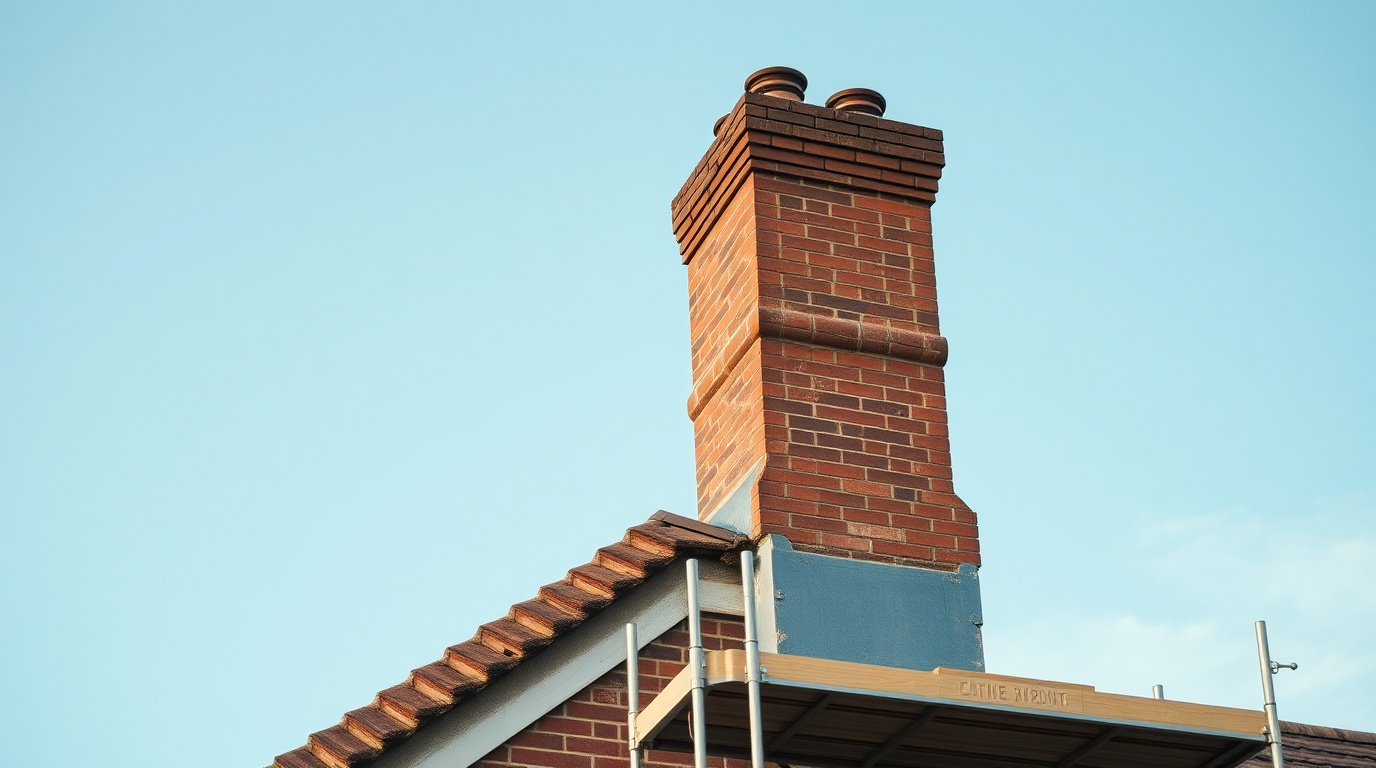
Chimney repair cost in the UK varies widely with the job. Small work such as repointing a stack or refitting flashing typically falls in the lower hundreds of pounds, while a partial or full chimney rebuild commonly runs into the low-to-mid thousands. The biggest single cost driver is usually access: a chimney is high up, so scaffolding or a tower hire can add a few hundred pounds before any masonry is touched. Other factors include the chimney's height and condition, whether it is a mid-terrace or detached property, the materials (brick, stone, lime mortar) and your region, with London and the South East generally dearer than the rest of the UK.
"Chimney repair" covers everything from a quick pointing job to a full rebuild, so a single price is misleading. The ranges below set realistic expectations before you ask anyone to quote.
At a glance
- Minor repairslow hundreds of pounds
- Major repairslow-to-mid thousands
- Biggest add-onscaffolding / access
- Key driversheight, condition, materials
- Dearest regionLondon & South East
Typical cost ranges by job type
Because a chimney can need anything from a small patch to a complete reconstruction, it helps to break the work into the common jobs. The figures below are indicative ranges drawn from established UK cost guides, not fixed quotes — every chimney is different and access can shift the total significantly. Treat them as a way to sanity-check the prices you are given rather than a promise. A reputable tradesperson should be able to explain which band your job sits in and why, and a written quote should itemise the labour, materials and access separately so you can see where the money goes.
One reason the same phrase — "chimney repair" — spans such a wide price range is that the underlying problems are so different in scale. A perished mortar joint and a leaning stack are both "repairs", but one is a few hours of pointing and the other is days of careful rebuilding. This is why an honest diagnosis matters before you focus on price at all: knowing whether your chimney needs pointing, a crown recast, new flashing, or a rebuild tells you which row of the table you are in, and therefore whether a quote of a few hundred or a few thousand pounds is the realistic one for your situation.
| Job | Typical UK range | Main cost driver |
|---|---|---|
| Repointing a stack | a few hundred pounds | stack size and access |
| Flashing repair / renewal | low-to-mid hundreds | roof type and lead work |
| Cap or cowl fitting | low hundreds (per pot) | number of pots, access |
| Crown / flaunching repair | low-to-mid hundreds | extent of cracking |
| Partial stack rebuild | high hundreds to low thousands | height rebuilt, materials |
| Full chimney rebuild | low-to-mid thousands | size, height, scaffolding |
Indicative ranges for guidance only. Sources: Checkatrade and MyJobQuote chimney cost guides.
Why access is so often the biggest cost
The single factor that surprises homeowners most is access. A chimney sits at the highest point of the roof, so before a mason can safely lay a brick they need a way to work up there. For anything more than a brief inspection, that usually means scaffolding, which on a typical house adds a few hundred pounds and sometimes more on a tall, terraced or awkward property. Lighter jobs may be done from a tower or roof ladder, which is cheaper, but a competent contractor will not cut corners on safety simply to keep the access bill down. This is why a small amount of physical repair can still carry a four-figure quote — much of the money is the platform that makes the work safe and legal under Work at Height Regulations 2005. If several jobs are needed, having them done in one visit while the scaffold is already up is far better value than calling someone back twice.
What else moves the price
Beyond access, several things push a chimney quote up or down. Height and condition matter most: a tall, weathered Victorian stack with crumbling mortar needs more work than a short, sound one. Materials count too — many older and listed properties require lime mortar rather than cheaper modern cement, and lime work is more skilled and slower. Property type affects access: a mid-terrace stack shared between houses, or one set back from the eaves, is harder to reach. Region is a consistent factor, with labour rates in London and the South East higher than the Midlands, North and most of Scotland and Wales. Finally, extent: a quote for repointing can rise sharply if, once the scaffold is up, the mason finds the brickwork beneath has perished and needs rebuilding. A good contractor will flag this risk up front and may suggest an inspection before committing to a fixed figure.
How to compare chimney repair quotes fairly
Because the work and the access vary so much, comparing quotes on price alone is risky. Get two or three written quotes and check they describe the same scope — one mason quoting to repoint, another to rebuild, are not comparable numbers. A clear quote should separate labour, materials and access (scaffolding), state the mortar type (especially lime for older homes), and note whether VAT is included. Be wary of a figure that looks far below the others; it often excludes scaffolding, or assumes minimal repair that will be revised upward once work starts. It is reasonable to ask how they reached the price, what happens if hidden damage appears, and whether the work carries any guarantee. The lowest quote is rarely good value if it has to be redone — chimney work that fails lets water into the roof, which is far more expensive to put right than the repair itself.
It also helps to understand why two quotes for the same chimney can differ so much. One contractor may price a full recast and repoint where another proposes a targeted patch; one may include scaffolding while another assumes a tower; one may use breathable lime mortar appropriate to an older home while another defaults to cheaper cement. None of these is necessarily wrong, but they are different jobs, so a like-for-like comparison means checking the scope, the materials and the access line by line rather than just the headline figure. Region matters too: labour and scaffolding hire in London and the South East typically sit above the national average, while parts of the North and the devolved nations can be lower. Treating the published ranges as a sense-check, and asking each contractor to itemise, is what turns a confusing spread of numbers into a decision you can actually make with confidence.
Frequently asked questions
Why is chimney repair so expensive for a small job?
Most of the cost is access, not masonry. Reaching a chimney safely usually needs scaffolding, which adds a few hundred pounds before any repair begins, so even a quick pointing job can carry a four-figure quote once the platform is included.
Do I need scaffolding for every chimney repair?
Not always. Brief inspections and very minor work can sometimes be done from a tower or roof ladder, which is cheaper. Anything involving sustained masonry work at the stack normally needs scaffolding to be done safely and legally.
Is chimney repair cheaper in some parts of the UK?
Yes. Labour rates are typically highest in London and the South East and lower across the Midlands, the North, Wales and Scotland. The same job can vary by a few hundred pounds between regions.
Sources & further reading
- Checkatrade — chimney repair cost guide
- MyJobQuote — chimney repair cost guide
- HSE — Work at Height Regulations 2005
Figures on this page are typical UK ranges drawn from published sources and depend on your specific chimney. They are guidance, not a quotation.