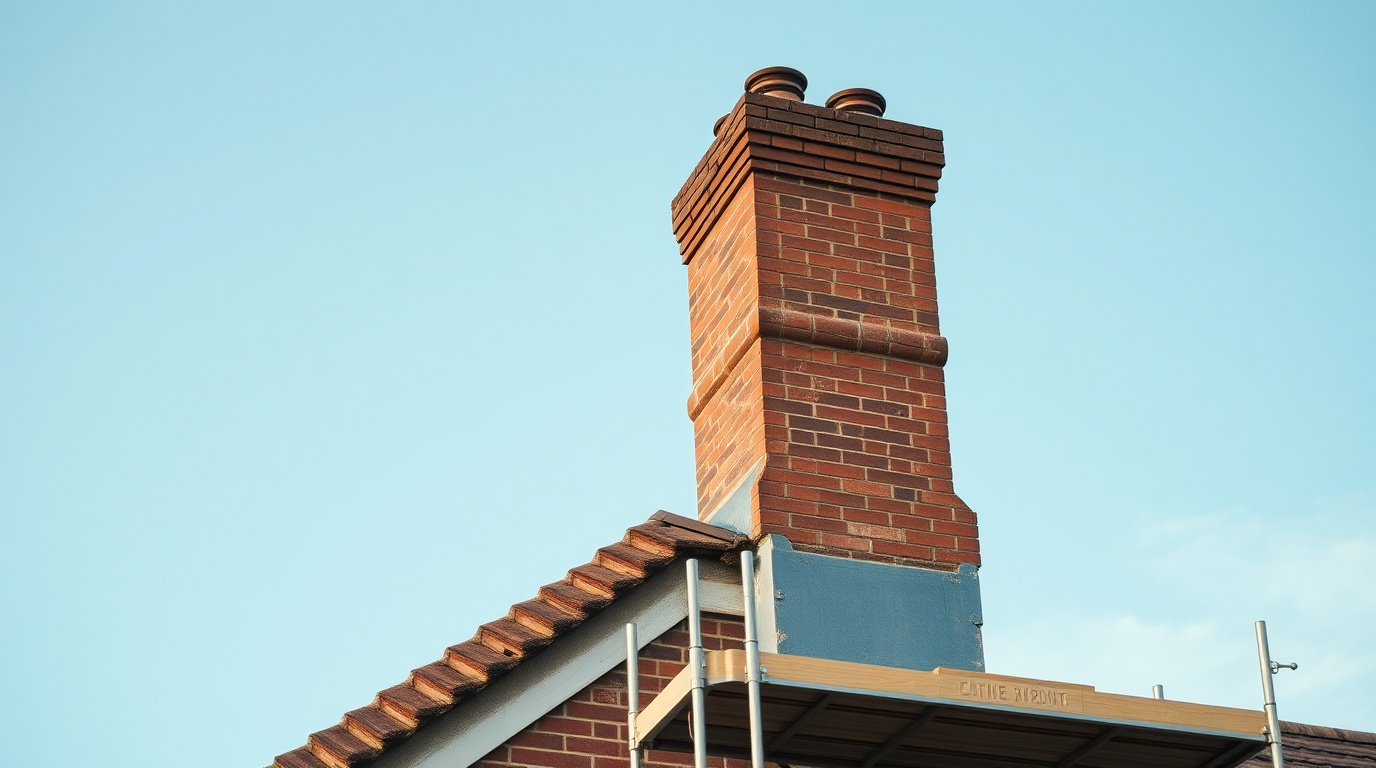
The short answer
Whether a chimney needs repair or rebuilding comes down to how far the damage has spread. Repair suits a stack that is fundamentally sound but has localised faults — perished pointing, a cracked crown, failed flashing, a few spalled bricks — and these are fixed by repointing, recasting and renewing the affected parts. Rebuilding is needed where deterioration is widespread or structural: extensive spalling, a leaning stack, severe sulphate attack, or mortar so far gone that the brickwork is loose. As a rough guide, if more than roughly a third to a half of the stack is failing, rebuilding the affected section is often better value than repeatedly patching it. A specialist inspection should confirm the extent of the damage and whether the stack is structurally safe, which is the deciding factor.
Chimney repair and rebuild are not really alternatives so much as two ends of one scale — minor faults sit at the repair end, structural failure at the rebuild end. The job is to work out where your stack falls.
Repair vs rebuild
- Repair suitslocalised, sound stack
- Rebuild suitswidespread or structural
- Rough thresholdroughly a third+ failing
- Deciderstructural safety
- Confirm withspecialist inspection
When repair is the right call
A chimney can be repaired when its core structure is still sound and the problems are localised and identifiable. The classic candidates are: perished pointing that needs raking out and repointing; a cracked or eroded crown that needs sealing or recasting; failed flashing at the roof junction that needs renewing; a handful of spalled bricks that can be cut out and replaced; and cracked or loose pots that can be re-bedded. These are all targeted repairs that address a specific defect without disturbing the rest of the stack.
Repair is usually the cheaper, less disruptive option and is the right choice for the great majority of ageing chimneys, which simply need their weather defences maintained. The key test is whether fixing the named faults will give a lasting result: if the brickwork between the failed joints is solid and the stack stands straight and stable, repair makes sense. Tackling several defects in one visit — while the scaffold or access is already up — keeps the cost of the access from being paid twice and is the most economical way to keep a sound chimney sound.
When a rebuild is needed
A chimney needs rebuilding when the deterioration is too widespread or too structural for patch repairs to hold. The clearest triggers are a leaning or bowing stack, severe sulphate attack that has expanded and broken down the mortar throughout, extensive spalling that has eaten away large areas of brick, and mortar that has failed so completely that the bricks are loose or moving. In these cases the masonry can no longer be relied on, and repointing or replacing odd bricks would be putting good money into a structure that is failing as a whole.
Rebuilding usually means taking the stack down — often just the section above the roofline, sometimes the whole stack — and reconstructing it, reusing sound bricks where possible and renewing the crown, flashing and pots as part of the same job. It is more expensive and disruptive than repair, but on a genuinely failing stack it is the only way to restore a safe, watertight chimney, and it resets the clock rather than buying a season at a time. A part-rebuild from the roofline is a common middle path: the worst (most exposed) section is rebuilt while the lower, sheltered masonry within the roof space is left if it is sound.
Comparing the two
Set side by side, repair and rebuild differ on cost, disruption, durability and the condition they suit. The table gives an indicative comparison; the right choice depends on your stack's actual condition, confirmed by inspection.
| Factor | Repair | Rebuild |
|---|---|---|
| Suits | localised faults, sound stack | widespread or structural damage |
| Indicative cost | £300–£2,000 | £1,500–£5,000+ |
| Disruption | lower, targeted | higher, stack dismantled |
| Durability | good if stack is sound | resets the stack's life |
| Choose when | weather defences have failed | masonry itself has failed |
Indicative figures for guidance; access, height and scope drive cost. Sources: Checkatrade / HomeOwners Alliance.
How to decide
The decision should rest on a professional inspection, not a guess from the ground, because the critical information — how far the mortar has gone, whether the stack is moving, how much of the brick is spalled — can only be judged at close range. A useful rule of thumb is the proportion of the stack that is failing: where defects are confined to specific parts and the rest is sound, repair; where roughly a third or more of the masonry is breaking down, or there is any structural movement, rebuilding the affected section is usually better value because repeated patching of a failing stack rarely lasts. Cost is a real factor, but it works alongside safety and longevity, not against them: a cheap repair that fails in two winters is no saving. Get the extent of the damage assessed, weigh the indicative costs against how long each option should last, and — where the stack may be unsafe — let safety be the deciding consideration.
Frequently asked questions
Is it cheaper to repair or rebuild a chimney?
Repair is almost always cheaper upfront and suits a sound stack with localised faults. But repeatedly patching a stack that is structurally failing wastes money, so where damage is widespread a rebuild is often better value over time despite the higher initial cost.
Can you rebuild just the top of a chimney?
Yes. A part-rebuild from the roofline is common: the most exposed section above the roof is taken down and rebuilt, while sound, sheltered masonry within the roof space is left in place. It is less costly than rebuilding the whole stack.
How do I know if my chimney is beyond repair?
Signs that point to rebuilding rather than repair include a leaning stack, loose or moving bricks, extensive spalling, and mortar that has broken down throughout. A specialist inspection is the reliable way to judge whether the masonry can still be relied on.
Sources & further reading
- HomeOwners Alliance — chimney repair guidance
- Checkatrade — chimney repair and rebuild costs
- RICS — get the work priced up
Figures on this page are typical UK ranges drawn from published sources and depend on your specific chimney. They are guidance, not a quotation.