The short answer
Chimney stack repair cost in the UK depends on what is wrong with the stack. Minor repairs such as repointing, a new crown (flaunching) or refitting a cowl usually fall in the low-to-mid hundreds of pounds. More serious work — a partial rebuild of a leaning or badly cracked stack — typically runs from high hundreds to low thousands. As with all chimney work, access is a large part of the bill: scaffolding to reach the stack safely can add a few hundred pounds. Other drivers are the stack's height and condition, the materials (brick, stone, lime mortar), property type and your region.
The chimney stack is the masonry that rises above the roof. Because faults range from a hairline crack to a dangerous lean, the cost spans a wide band — set by the diagnosis.
At a glance
- Repointing / crown / cowllow-to-mid hundreds
- Partial rebuildhigh hundreds to low thousands
- Access add-ona few hundred pounds
- Key driversfault type, height, materials
- Dearest regionLondon & South East
Stack repair costs by problem
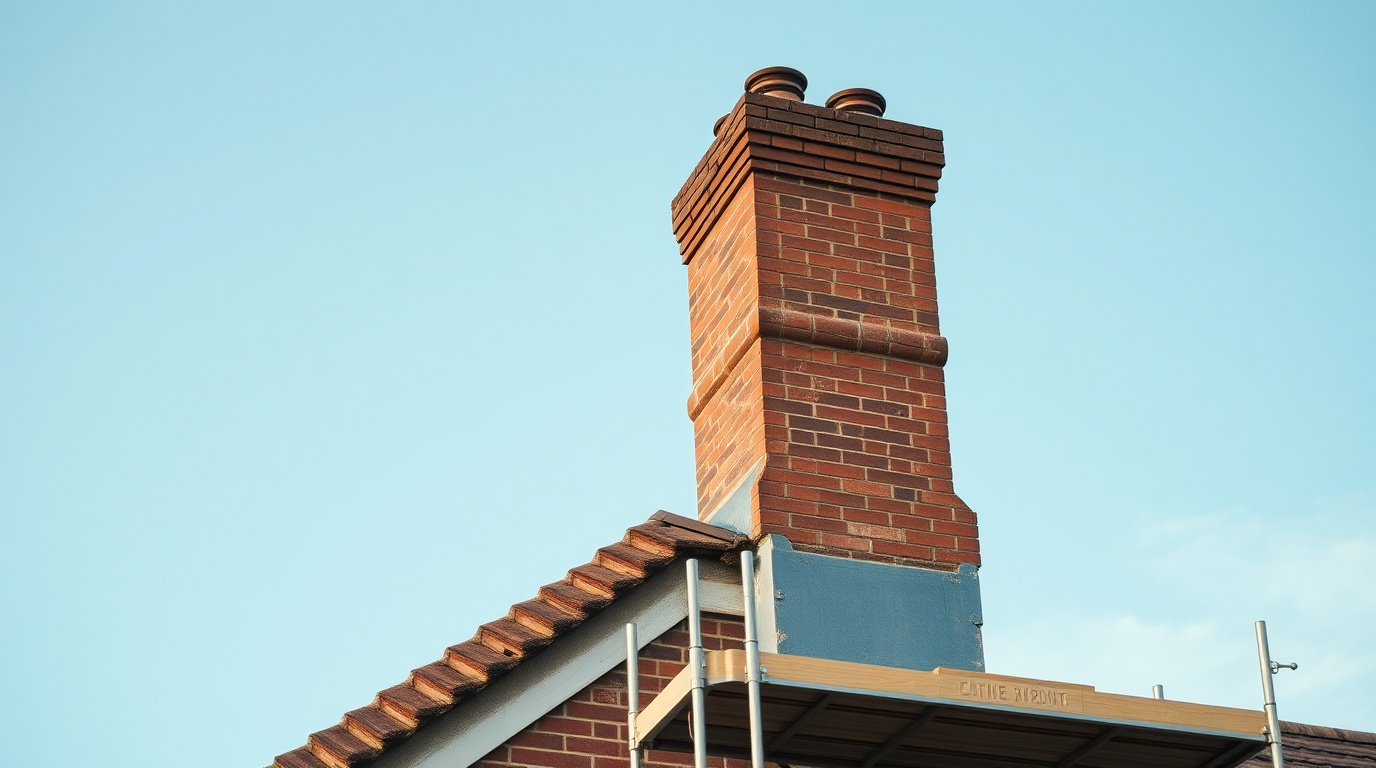
The chimney stack is the masonry column that projects above the roofline, ending in the crown (flaunching) and pots. Repair cost follows the fault: a small amount of failed pointing is a modest job, while a stack that has started to lean or shows structural cracking needs rebuilding. The ranges below are indicative guidance from established UK cost guides, not fixed quotes. The most useful first step is an honest diagnosis — ideally an inspection — because the difference between "repoint the joints" and "rebuild the top metre" is the difference between a few hundred pounds and a few thousand.
It is worth recognising that stack faults rarely arrive alone. A weathered stack with perished mortar will often also have a cracked crown and tired flashing, because all three are exposed to the same wind, rain and frost over the same years. That is why a contractor who inspects from the scaffold may come back with a longer list than the single problem you spotted from the ground — and why the lowest-looking quote is not always the one that leaves the stack genuinely sound. Pricing the work as a sensible package, rather than fixing one fault and leaving the rest to fail next winter, is usually the better value over the life of the chimney.
| Stack problem | Typical repair | Typical UK range |
|---|---|---|
| Perished mortar joints | repointing | low-to-mid hundreds |
| Cracked crown / flaunching | crown repair / recast | low-to-mid hundreds |
| Loose / missing pot or cowl | refit pot, fit cowl | low hundreds per pot |
| Failed flashing at base | renew lead flashing | low-to-mid hundreds |
| Leaning / cracked stack | partial rebuild | high hundreds to low thousands |
Indicative ranges for guidance only. Sources: Checkatrade and MyJobQuote chimney cost guides.
Why access dominates stack repair pricing
Because the stack sits at the very top of the building, access is unavoidable and often the single biggest line on the quote. For most stack work a contractor needs scaffolding, which can add a few hundred pounds before any masonry is touched; lighter jobs may be possible from a tower or roof access platform, which is cheaper. The choice is driven by safety under the Work at Height Regulations 2005, not just price. Because that access cost is broadly fixed however much repair is done, it is far better value to deal with several stack issues in one visit — repointing, a recast crown, a new cowl and re-dressed flashing — while the scaffold is up, rather than calling someone back for each. A reputable contractor will usually point this out and price a combined job.
Crowns, flashing and pots — the supporting repairs
Stack repair is rarely just the brickwork. The crown (flaunching) is the mortar cap that sheds water off the top of the stack and holds the pots; when it cracks, water gets in and frost damage follows, so recasting it is a common and worthwhile repair. The flashing where the stack meets the roof is the most frequent source of chimney-related leaks; renewing or re-dressing the lead there protects the ceilings below. Pots and cowls may need refitting if loose, or replacing if cracked, and a cowl can stop rain, birds and downdraught. None of these are large jobs on their own, but each requires the same costly access, which is exactly why bundling them is sensible. If a contractor quotes only for the brick repointing on a clearly weathered stack, it is reasonable to ask whether the crown and flashing also need attention while the scaffold is up.
Getting fair stack-repair quotes
To get the work priced up properly, make sure each one describes the same scope and the same diagnosis — one contractor pricing to repoint and another to partially rebuild are not comparable. A clear quote should itemise labour, materials, access and any finishing items (crown, flashing, pots, cowls), state the mortar type (lime for older or listed homes), and confirm whether VAT is included. Get two or three quotes, and treat a figure well below the others with caution — it often excludes scaffolding or assumes minimal work. Ask how variations are handled if hidden damage appears once the stack is opened up, and whether the work carries a guarantee. Because a failing stack lets water into the roof and can become a safety hazard if masonry falls, the durability of the repair matters as much as the price.
Because "stack repair" covers such a wide range, the single most useful thing you can do is get the diagnosis right before the price. A stack that is structurally sound but has perished joints needs only repointing; one with a cracked crown needs recasting; one that is leaning or has spalled bricks may need a partial or full rebuild. These sit at very different points on the cost scale, so a quote is only meaningful once everyone agrees what is actually wrong. An inspection — ideally from the scaffold, sometimes with a borescope inside the flue — is worth paying for when the problem is unclear, because it stops you buying a rebuild when a repoint would have done, or vice versa. When you do get the work priced up, make sure each one is pricing the same scope; a figure that looks low often turns out to cover less work, cheaper mortar, or no scaffolding.
Frequently asked questions
What is the chimney stack exactly?
The stack is the masonry column that rises above the roofline, ending in the crown and pots. Repairs to it include repointing, crown repair, flashing renewal, refitting pots and cowls, and partial rebuilding when it leans or cracks.
How do I know if my stack needs repairing or rebuilding?
If the joints have failed but the bricks and alignment are sound, repointing is enough. A stack that leans, shows structural cracks, or has widely perished bricks usually needs a partial rebuild instead, which costs considerably more.
Is a leaning chimney stack dangerous?
A noticeably leaning stack can be, because masonry may eventually fall. It should be inspected promptly by a competent builder or surveyor, who can advise whether it needs rebuilding and whether any immediate precautions are required.
Sources & further reading
- Checkatrade — chimney stack repair cost guide
- MyJobQuote — chimney stack repair cost guide
- HomeOwners Alliance — roof and chimney guidance
Figures on this page are typical UK ranges drawn from published sources and depend on your specific chimney. They are guidance, not a quotation.