The short answer
A damp chimney breast usually has one of four causes. Penetrating damp is the most common: rain enters through a failed crown, pointing, flashing or porous brick high on the stack and tracks down inside the breast. A blocked-up but unventilated flue traps moisture and lets it soak the masonry. Hygroscopic salt staining happens where decades of soot and flue deposits leave salts in the brickwork that draw moisture from the air, leaving permanent-looking tide marks. Condensation on cold masonry, especially in a sealed-off breast, adds to the problem. The right fix depends on which cause applies — sealing the leak, ventilating a closed flue, replacing salt-contaminated plaster, or improving warmth and airflow — so correct diagnosis comes first.
A damp patch on the chimney breast looks the same whatever the cause, but the cure is different for each. Identifying the true source is the difference between a lasting fix and a stain that keeps coming back.
Four causes
- Penetrating dampleak from the stack above
- Blocked flueno ventilation, trapped moisture
- Salt staininghygroscopic soot salts
- Condensationcold masonry, poor airflow
- First stepdiagnose before treating
Penetrating damp from the stack
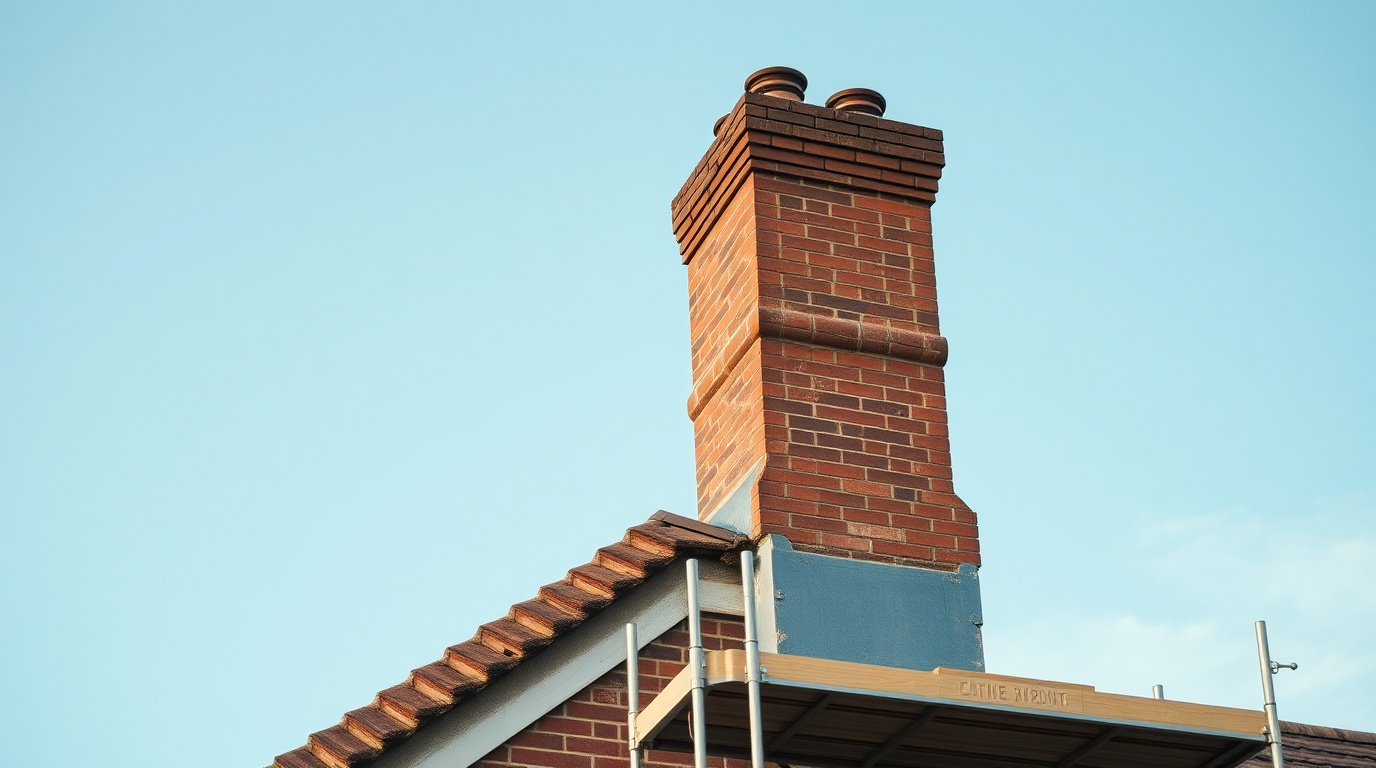
The most frequent cause of a damp chimney breast is penetrating damp — water entering the chimney high up and travelling down through the masonry until it shows as a stain inside the house. The entry points are the chimney's weather defences: a cracked or eroded crown, perished pointing, failed flashing where the stack meets the roof, and porous or spalling brick. Because the chimney is the most exposed masonry on the building, these defects are common, and any of them lets rain into the structure.
The tell-tale sign of penetrating damp is its timing: it appears or worsens after rain, especially wind-driven rain on one elevation, and dries back somewhat between wet spells. The stain often has a yellow-brown halo and can show in the bedroom above as well as the room with the fireplace. Tracing it means inspecting the stack at roof level for the failed defence, because the visible stain is usually some way below the actual leak. Fixing penetrating damp is about repairing that defect — recasting the crown, repointing, or renewing flashing — not about treating the wall inside.
Blocked-up flues and condensation
A very common cause in modern homes is a blocked-up flue with no ventilation. When an open fire is removed and the chimney breast is plastered over or the opening bricked up, the flue still connects to the outside air at the top. Warm, moist household air rises into the cold flue and condenses; with the bottom sealed and no air movement, that moisture has nowhere to go and soaks into the surrounding masonry, leaving a damp breast. The fix is straightforward in principle — ventilate the flue at both top and bottom (a capped-but-vented cowl on the pot and an airbrick or vent in the breast) so air can circulate and the moisture escapes rather than building up.
Condensation in its own right also affects chimney breasts. The masonry of a chimney is cold and dense, so it is a natural surface for warm indoor air to condense on, particularly in poorly heated or poorly ventilated rooms. This shows as surface dampness, mould or musty smells rather than a halo-edged stain tied to rainfall, and it is improved by warmth and ventilation rather than masonry repair.
Hygroscopic salt staining
Older chimneys that have burned coal or wood for decades carry a particular problem: hygroscopic salts. The combustion products — chlorides, nitrates and sulphates — are deposited in the flue lining and the surrounding brickwork over many years. These salts are hygroscopic, meaning they actively draw moisture out of the air. The result is a chimney breast that appears permanently damp, with brown or yellow staining and sometimes a fluffy white salt deposit, even when there is no active leak. The staining tends to bleed through paint and ordinary plaster repeatedly, because the salts remain in the wall and keep pulling in moisture and migrating to the surface.
Salt contamination is identified by its persistence and its salt deposits, and by the fact that it does not track rainfall the way penetrating damp does. The standard remedy is to hack off the contaminated plaster and re-plaster using a salt-retardant or specialist renovating plaster (sometimes with a salt-inhibiting membrane) so the salts can no longer reach the decorated surface. Simply repainting over salt staining almost never lasts.
Diagnosing before you treat
Because all four causes produce a similar-looking stain, the costly mistake is to treat the wrong one — repointing a stack whose problem was an unventilated flue, or repainting over salts that need the plaster removed. A methodical diagnosis separates them: does the damp track rainfall (penetrating), is the flue blocked up with no vents (condensation/trapped moisture), are there persistent salts and a long burning history (hygroscopic staining), or is the room cold and unventilated (condensation)? More than one can be present at once — a leak and a salt-laden old flue together, for instance. A damp survey, including a look at the stack at roof level and the ventilation of the breast, identifies which mechanisms are at work so the repair addresses the real cause rather than the symptom on the wall.
| Cause | Telltale sign | Typical remedy |
|---|---|---|
| Penetrating damp | worsens after rain | repair crown / pointing / flashing |
| Unventilated flue | blocked breast, no vents | ventilate top and bottom |
| Hygroscopic salts | persistent salt staining | re-plaster with salt-retardant |
| Condensation | cold room, mould, musty | heat and ventilate |
Indicative guidance for diagnosis. Sources: HomeOwners Alliance / Property Care Association damp guidance.
Frequently asked questions
How do I tell penetrating damp from salt staining on a chimney breast?
Penetrating damp appears or worsens after rain and dries back between wet spells. Hygroscopic salt staining is persistent regardless of weather, often comes with visible white salt deposits, and bleeds back through fresh paint because the salts remain in the wall.
Why is my bricked-up chimney damp?
Most likely because it was sealed without ventilation. Moist air condenses inside the cold flue and, with no airflow, soaks the masonry. The fix is to add ventilation — a vented cap on the pot and an airbrick in the breast — so the flue can dry out.
Will re-plastering fix a damp chimney breast?
Only if the cause is hygroscopic salt contamination, where salt-retardant plaster is the correct remedy. If the cause is a leak or an unventilated flue, re-plastering alone will not last — the underlying water path or ventilation problem must be fixed first.
Sources & further reading
- HomeOwners Alliance — damp and chimney guidance
- Property Care Association — damp guidance
- SPAB — damp in older buildings
Figures on this page are typical UK ranges drawn from published sources and depend on your specific chimney. They are guidance, not a quotation.