The short answer
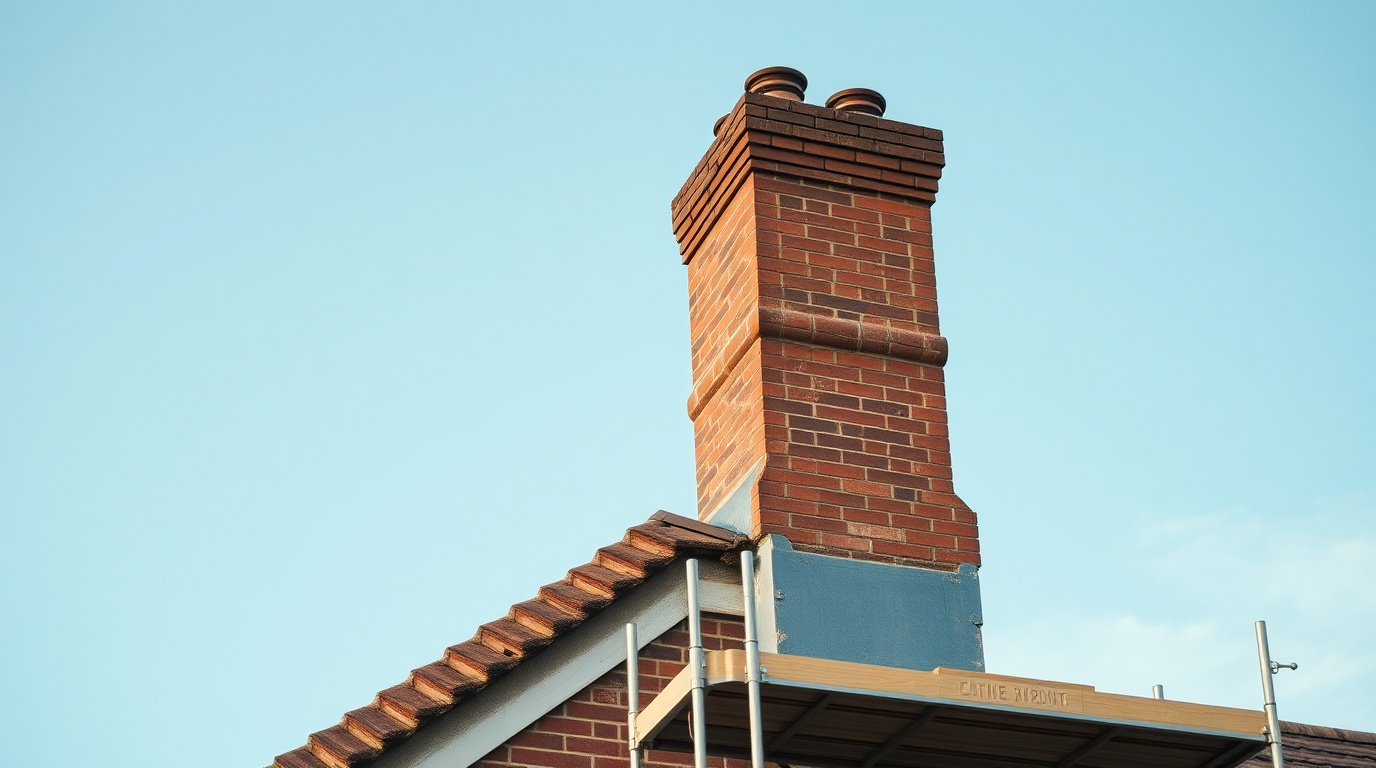
For most substantial chimney repairs, scaffolding is needed, because it provides a safe, stable working platform around a stack at the highest point of the roof. UK Work at Height Regulations 2005 require work at height to be properly planned and carried out from a safe platform where there is a risk of a fall — and there always is on a chimney. That said, not every job needs full scaffolding: brief inspections and very minor tasks can sometimes be done from a scaffold tower or a roof access platform. The right access depends on the scale of the work, the height and pitch of the roof, and how long someone must work up there. A reputable contractor chooses access on safety grounds, not just cost.
Scaffolding is the single biggest add-on to a chimney quote, so it is worth understanding when it is genuinely required and when a lighter, cheaper platform will do.
At a glance
- Usually needs scaffoldrepointing, rebuild, full flashing
- Tower may sufficeminor repair, short duration
- Governed byWork at Height Regs 2005
- Key factorsheight, pitch, time at height
- Chosen onsafety, not just price
When scaffolding is needed
The general rule is that the more masonry work a job involves, and the longer someone must work at the stack, the more likely full scaffolding is required. Repointing, rebuilds, full flashing renewal and crown recasts all involve sustained, two-handed work where the tradesperson needs a stable platform, materials to hand, and freedom to move around the stack — exactly what scaffolding provides. By contrast, a quick inspection, a small cowl fitting, or a minor flashing patch may be possible from a lighter platform. The table below shows the typical pattern, but it is a guide, not a rule — the height and pitch of your roof and the condition of the chimney can push even a small job towards scaffolding for safety.
| Job | Typical access | Why |
|---|---|---|
| Inspection only | tower / roof ladder | brief, no heavy work |
| Fit a cowl | tower (or scaffold if high) | quick, single position |
| Minor flashing patch | tower / scaffold | depends on roof pitch |
| Repointing a stack | scaffolding | sustained two-handed work |
| Crown recast | scaffolding | working around the stack |
| Rebuild | scaffolding | days of masonry at height |
Indicative guidance only. The contractor chooses access based on the specific roof and risk.
What the rules require
Working on a chimney is work at height, governed by the Work at Height Regulations 2005. These require that work at height be properly planned, supervised and carried out safely, using the most suitable equipment, and that the risk of a fall is controlled. The regulations do not say "scaffolding always" — they follow a hierarchy: avoid working at height where possible, then use a safe working platform (such as scaffolding or a tower), and only then rely on other measures. For sustained masonry work on a stack, a scaffold is usually the most appropriate platform; for a brief task, a properly secured tower or roof platform may be. The key point for a homeowner is that access is a safety decision made by a competent contractor, and you should be wary of anyone proposing to do a major repair while balanced on a ladder, which is neither safe nor compliant.
Why scaffolding costs what it does
Scaffolding is often the largest single item on a chimney quote, which surprises homeowners when the actual repair is small. The cost reflects the labour to erect and dismantle it, the hire period of the materials, and the complexity of the property — a tall, terraced, or awkwardly shaped house takes longer to scaffold than a simple detached one. Because that cost is largely fixed regardless of how much repair is done, the smart approach is to combine jobs: if the scaffold is up for repointing, getting a new cowl, crown recast and flashing repair done at the same time spreads the access cost across several jobs. This is the main reason a single small repair can carry a four-figure quote, and the main reason it is worth asking a contractor what else is due before they take the scaffold down.
Alternatives to full scaffolding
Where the job and roof allow, there are lighter alternatives. A scaffold tower (a mobile, free-standing tower) can give a safe platform for shorter tasks at moderate height. A roof access platform or a properly secured roof ladder may suit a brief inspection. Some specialists also offer access via a cherry picker or mobile elevating work platform (MEWP) for certain sites, which can be quicker than erecting a scaffold for a short job. None of these is a universal substitute for scaffolding — each suits particular jobs, heights and roof types, and the contractor must judge what is safe. The honest position is that the access should fit the work: do not pay for a full scaffold for a five-minute cowl fitting, but equally do not accept a ladder for a two-day rebuild. If a contractor proposes lighter access, it is reasonable to ask how it keeps the work safe and compliant.
It also helps to see scaffolding as part of the quality of the repair, not just a safety cost. A stable, guarded platform that surrounds the stack lets the tradesperson work with both hands, keep materials and tools to hand, and move freely around all faces of the chimney — which is exactly what good masonry needs. Work done from a cramped or one-sided position tends to be rushed and uneven, and is more likely to fail early. That is why the Work at Height Regulations 2005 favour a proper working platform for sustained tasks, and why a contractor who insists on scaffolding for a rebuild is usually protecting the outcome as well as their crew. Where you can genuinely save is by bundling jobs so one scaffold serves several repairs, or by accepting a lighter platform for a genuinely brief task — not by pressing for major masonry to be done off a ladder, which trades a small saving for real risk and poorer work.
Frequently asked questions
Is scaffolding a legal requirement for chimney repair?
Not specifically, but the Work at Height Regulations 2005 require a safe working platform where there is a fall risk. For sustained masonry work on a stack, scaffolding is usually the appropriate platform; for brief tasks a secured tower may be acceptable.
Can I avoid scaffolding to save money on chimney repair?
Sometimes, for very minor or brief work that can be done from a tower or roof platform. For repointing, crown recasts, full flashing or rebuilds, scaffolding is normally needed for safety, and avoiding it on those jobs is not a sensible saving.
Why is the scaffolding more expensive than the repair?
Scaffolding cost covers erecting, hiring and dismantling a platform around a high, often awkward stack, and that cost is largely fixed regardless of how small the repair is. Combining several jobs while the scaffold is up is the smart way to get value from it.
Sources & further reading
- HSE — Work at Height Regulations 2005
- Checkatrade — scaffolding cost guide
- MyJobQuote — scaffolding cost guide
Figures on this page are typical UK ranges drawn from published sources and depend on your specific chimney. They are guidance, not a quotation.