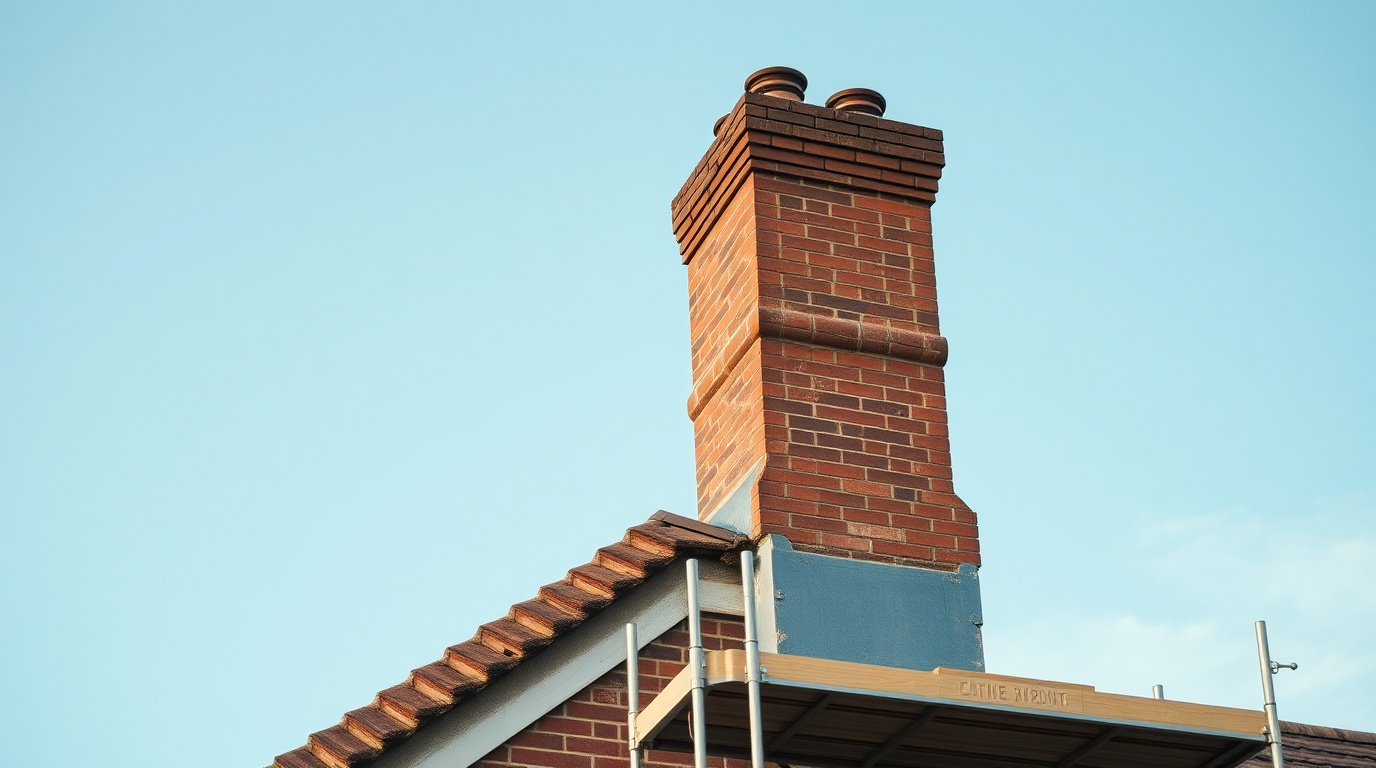
The short answer
Repointing a chimney means renewing the mortar joints between the bricks or stones of the stack. The process is: erect safe access (usually scaffolding); rake out the old, perished mortar to a sound depth without damaging the masonry; brush and dampen the joints; mix the correct mortar (cement on many modern stacks, breathable lime on older or listed homes); press the new mortar firmly into the joints; then finish (strike) the joint profile and let it cure slowly, protected from rain and frost. Done well, it sheds water and protects the brickwork for decades; done badly — wrong mortar, shallow raking — it fails quickly.
Repointing looks simple but the detail matters: how deep the old mortar is cut out, which mix replaces it, and how it cures all decide whether the repair lasts.
At a glance
- Step 1safe access (scaffold/tower)
- Step 2rake out perished mortar
- Step 3brush, dampen joints
- Step 4press in correct mortar
- Step 5strike profile, cure slowly
The repointing process, step by step
Repointing follows a clear sequence, and each step affects the result. First, safe access is set up — usually scaffolding for a full stack, so the mason can work all round it. Next, the old perished mortar is raked out to a sound depth (typically a couple of times the joint width) using hand tools or a careful mechanical method, without chipping the brick edges. The joints are then brushed clean and dampened so the dry masonry does not suck moisture out of the new mortar too fast. Fresh mortar of the correct mix is pressed firmly into the joints in layers, then the joint is finished (struck) to the right profile to shed water. Finally it is left to cure slowly, protected from rain and frost. The table summarises the stages.
| Stage | What happens | Why it matters |
|---|---|---|
| Access | scaffold / tower erected | safe, all-round working |
| Rake out | old mortar cut to sound depth | new mortar keys in properly |
| Prepare | brush + dampen joints | stops moisture being drawn out |
| Fill | press mortar in firmly | no voids, full bond |
| Finish | strike joint profile | sheds water off the joint |
| Cure | protect, dry slowly | full strength, no cracking |
Typical repointing sequence. Method and mortar are adapted to the building's age and materials.
Choosing the right mortar
The mortar mix is the most important technical decision in repointing. On many modern brick stacks, a cement-based mortar is appropriate and durable. But on older, solid-wall and listed buildings, the correct material is usually lime mortar. Lime is softer and breathable: it lets the wall release moisture and flexes slightly with the building, whereas a hard cement mortar on a wall designed for lime can trap water, force moisture into the bricks, and cause frost and salt damage to the masonry faces. Matching the new mortar's colour, texture and strength to the original also matters on older or visible work. This is why a competent contractor asks about the age and construction of your home before quoting, and why "what mortar will you use?" is one of the most useful questions you can ask — the wrong choice can do more harm than the failed joints it replaces.
Why technique and curing decide longevity
Repointing that fails early usually fails because of technique, not bad luck. If the old mortar is raked out too shallow, the new mortar has nothing to key into and soon falls out. If the joints are not dampened, the dry masonry pulls water from the mix and weakens it. If the mortar is not pressed in fully, voids let water sit and freeze. And if it is not cured slowly and protected, it can dry too fast, crack, or be washed out by rain before it has set — which is why timing the work for settled weather and protecting fresh work matters. Lime mortar in particular needs patience: it cures more slowly and must be kept off frost while it gains strength. Good repointing is therefore as much about preparation and aftercare as about the few minutes of pressing mortar into a joint. When all the steps are done properly, the result protects the stack for decades.
When repointing is the right repair
Repointing is the correct repair when the mortar joints have failed but the bricks and the stack itself are sound — they are upright, not cracked, and the brick faces have not perished. In that situation, renewing the joints restores the stack's ability to shed water and prevents the decay from spreading. Repointing is not the answer if the bricks themselves have spalled or crumbled, if the stack is leaning, or if there is structural cracking — at that point a partial or full rebuild is needed, because new mortar around failing bricks will not make the stack safe or durable. A good contractor will tell you honestly which category your chimney is in, ideally after an inspection from the scaffold, rather than repointing a stack that really needs rebuilding. Catching joint failure early, while the bricks are still sound, is what keeps the cheaper repointing option open.
It is also worth knowing how to recognise good repointing once it is done, so you can judge the work and not just the price. Well-finished joints are fully filled and firmly compacted, struck to a consistent profile that sheds water, and matched in colour and texture to the surrounding masonry on visible or older work. Poor repointing shows as smeared mortar across the brick faces, uneven or hollow joints, a hard cement mix on a wall that needed breathable lime, or shallow filling that has not keyed in. Because much of the quality is decided by preparation and curing that you cannot see after the event, it is reasonable to ask the contractor how deep they raked out, what mix they used and why, and how they will protect the fresh work while it cures. A contractor confident in their method will answer readily; vagueness about mortar or technique is a warning worth heeding before the scaffold comes down.
Frequently asked questions
How deep should old mortar be raked out when repointing?
As a rule of thumb, to roughly twice the joint width, reaching sound mortar so the new mix has something to key into. Raking out too shallow is a common cause of early failure, as the fresh mortar soon falls out.
Should a chimney be repointed in lime or cement?
It depends on the building. Modern brick stacks are often fine in cement, but older, solid-wall and listed homes usually need breathable lime mortar, which lets the wall release moisture. Cement on a lime-built stack can trap damp and damage the bricks.
How long does repointed mortar take to cure?
It varies with the mix and weather. Cement gains strength over several days, while lime mortar cures more slowly and must be protected from rain and frost while it sets. Fresh work should be kept off heavy weather until it has hardened.
Sources & further reading
- Historic England — repointing brick and stone walls
- Checkatrade — chimney repointing guide
- MyJobQuote — chimney repointing guide
Figures on this page are typical UK ranges drawn from published sources and depend on your specific chimney. They are guidance, not a quotation.