The short answer
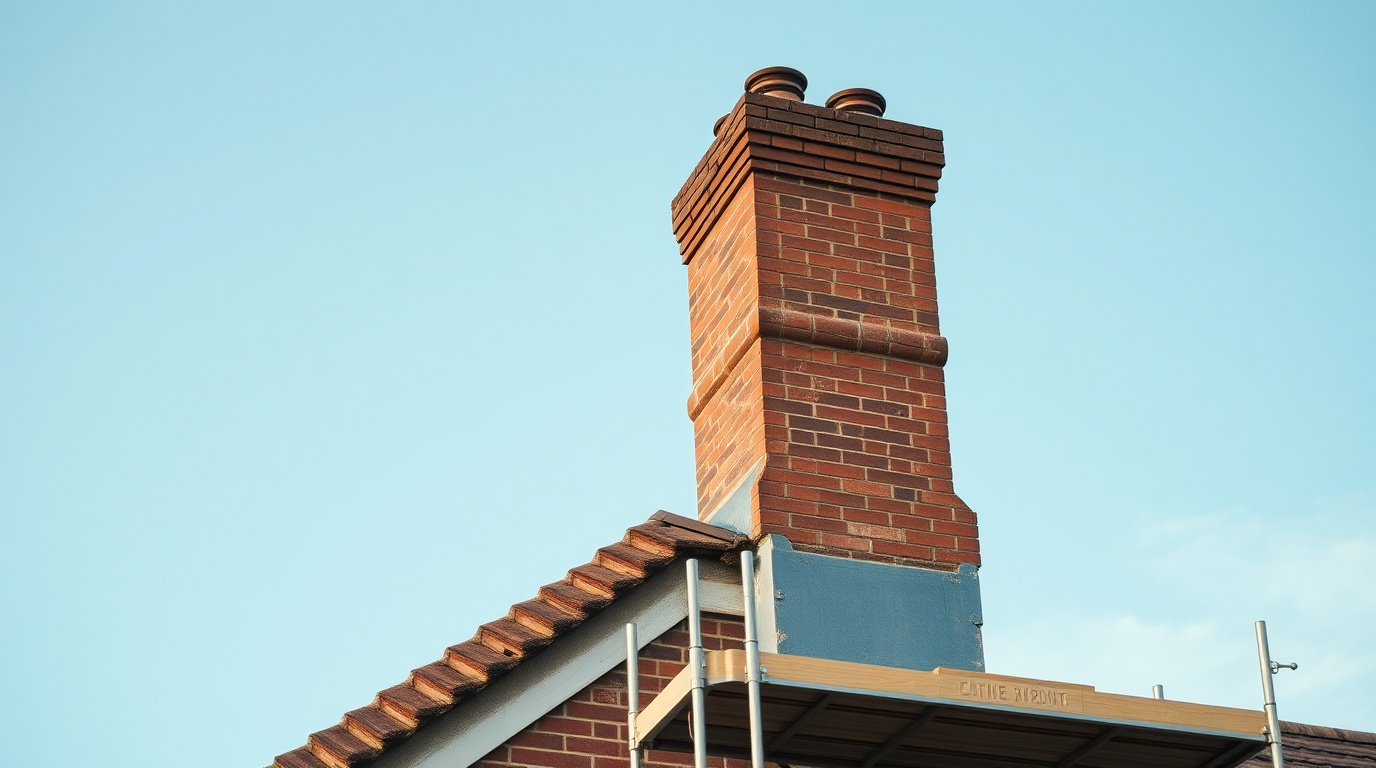
A chimney stack leans mainly because the mortar joints on one side have failed faster than the other, so the stack tilts towards its weaker face. The most common UK cause is sulphate attack, where sulphates in old flue gases and rainwater react with the cement in the mortar, making it expand and pushing the stack over — classically towards the south or south-west weather face. Other causes are eroded or perished pointing, frost damage, foundation or roof structure movement, and historic thermal and moisture cycling. A genuine lean is a structural safety issue: the fix ranges from repointing and rebuilding the top courses to taking the stack down and rebuilding it, and a leaning stack should be inspected promptly because it can fall.
A chimney that no longer rises straight is sending a clear structural signal. Understanding why stacks lean explains both the urgency and the repair.
Why stacks lean
- Most commonsulphate attack on mortar
- Typical leantowards the weather face
- Also caused byeroded pointing, frost
- Less commonfoundation movement
- Statusstructural — inspect promptly
Why a chimney stack leans
A stack leans because one side of it has weakened or expanded relative to the other, and the most common reason in British housing is sulphate attack. The sulphates come from two places: the flue gases deposited inside the chimney over decades of coal and wood burning, and the rainwater that soaks the brickwork. These sulphates react with the cement in the mortar joints to form expansive crystals, which make the joints swell and grow. Crucially, this happens most on the side that gets the wettest — usually the south or south-west weather face that takes the prevailing wind-driven rain. As that face expands more than the sheltered side, the whole stack is gradually pushed over, leaning away from the weather. A horizontally cracked, stepped joint pattern on the leaning face is the classic signature.
Sulphate attack is not the only cause. Eroded or perished pointing on one elevation lets that side compress and shift, frost damage breaks down the joints, and very occasionally the trouble is below — foundation movement, subsidence, or movement in the roof structure that supports the stack. Old chimneys with no proper foundation, or those weakened by years of moisture and thermal cycling, are the most vulnerable.
How dangerous is it?
A confirmed lean should be treated as a structural safety matter, not a cosmetic one. A chimney stack is a tall, heavy mass of masonry sitting high on the roof; if it continues to move it can ultimately fail and fall, taking roof tiles with it and posing a real danger to anyone below. The risk rises in high winds and storms, which is exactly when an already-leaning stack is under most load.
That said, not every stack that looks slightly off-vertical is in imminent danger, and some old chimneys have leaned a little for a very long time. The important questions are whether the lean is active (still moving) or long-stable, and how far the underlying mortar has gone. This is not a judgement to make from the ground with the naked eye. A chimney specialist, roofer or structural engineer should inspect it at close range, assess the joints and brickwork, and decide whether it can be repaired in place or needs taking down. Where a lean is pronounced or appears to be worsening, prompt professional advice is the safe course.
How a leaning stack is fixed
The remedy depends on how far the stack has gone and what caused it. Where the lean is mild and the brickwork still sound, raking out and repointing the failed joints — replacing sulphate-attacked mortar with a sound, more sulphate-resistant or lime-based mix — may stabilise it. More often a leaning stack needs the top section taken down and rebuilt, reusing good bricks where possible and renewing the crown, flashing and pots in the same operation. A badly affected stack may be fully rebuilt from the roofline, or — if the chimney is no longer used — removed down to roof level and the roof made good. If the cause is below the chimney, such as foundation movement, that has to be addressed too, which may bring in underpinning or structural work.
| Lean / cause | Typical fix | Indicative cost range |
|---|---|---|
| Mild lean, sound brick | rake out and repoint | £500–£1,500 |
| Top courses affected | rebuild stack top | £1,000–£3,000 |
| Severe lean / sulphate | rebuild from roofline | £2,000–£5,000+ |
| Unused stack | remove to roof level | £1,000–£3,000 |
Indicative figures for guidance; scaffold, height and access drive cost. Sources: Checkatrade / HomeOwners Alliance.
Preventing recurrence
If sulphate attack caused the lean, simply rebuilding without changing anything invites the same outcome, so a durable fix tackles the water and the gases as well as the masonry. Keeping the stack dry is central — sound pointing, a watertight crown, well-dressed flashing and a capped or cowled flue all reduce how much rainwater and condensate the brickwork holds, which is what feeds sulphate expansion in the first place. Where a stack is rebuilt, using sulphate-resisting cement or an appropriate lime mortar and frost-resistant bricks gives the new work a far better chance. For an unused chimney, capping the pot with a ventilated cowl stops rain entering while still letting the flue breathe, which keeps the masonry dry without trapping moisture. Periodic inspection after hard winters and storms catches early movement while it is still a repointing job rather than a rebuild.
Frequently asked questions
Why do chimneys usually lean towards the south or west?
Because that is the prevailing weather face in most of the UK. The south-west elevation takes the most wind-driven rain, so sulphate attack and frost erode its mortar joints fastest, causing that side to expand or weaken and the stack to tilt over towards the weather.
Should I call a structural engineer for a leaning chimney?
For a pronounced or worsening lean, yes. A chimney specialist or roofer can assess many cases, but where the cause may be foundation movement or the stack has clearly shifted, a structural engineer can confirm the cause and the safe remedy before work begins.
Can a leaning chimney be straightened, or must it be rebuilt?
A mild lean caused by failed pointing can sometimes be stabilised by repointing, but a stack cannot generally be pushed back upright. Pronounced leans are usually corrected by taking down and rebuilding the affected section so it rises true again.
Sources & further reading
- HomeOwners Alliance — chimney repair guidance
- RICS — get the work priced up for structural assessment
- Checkatrade — chimney rebuilding costs
Figures on this page are typical UK ranges drawn from published sources and depend on your specific chimney. They are guidance, not a quotation.