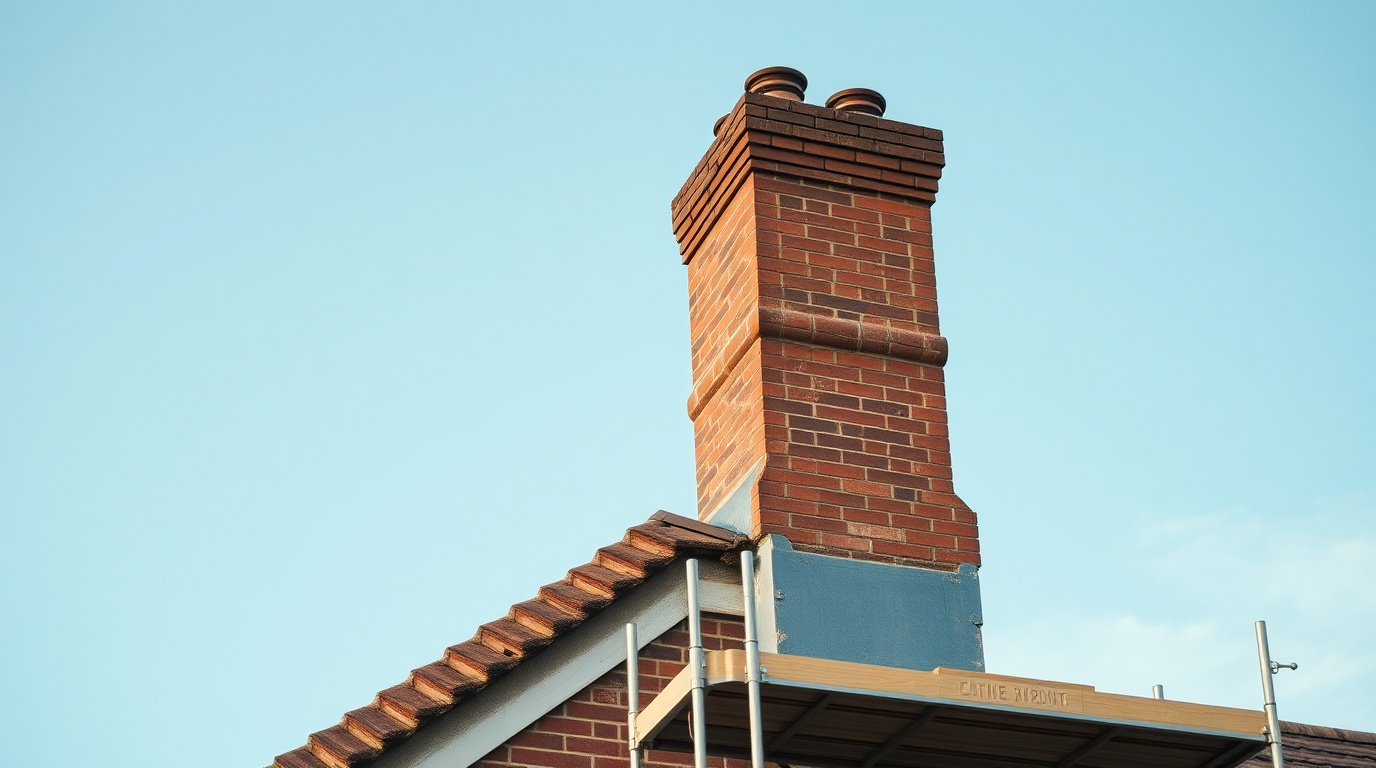
The short answer
These are not really alternatives, because masonry repair and flue lining solve different problems. Repairing the chimney — repointing, recasting the crown, renewing flashing, replacing spalled brick — keeps the structure sound and watertight and is about the outside of the stack. Fitting a flue liner makes the inside of the flue safe and efficient for an appliance: a stainless liner is needed when installing a stove, when the existing flue is damaged or unlined, or when a flue has failed an inspection. A chimney with structural or weather defects needs masonry repair; a flue that is unsafe, leaking gases or unsuitable for the appliance needs lining. Often a working chimney needs both — sound masonry around a properly lined flue — so the right question is which problems your chimney actually has.
People often frame this as repair versus lining, but the two address separate parts of the chimney — the masonry shell and the flue inside it. Many chimneys need attention to both.
Repair vs line
- Masonry repairstructure and weatherproofing
- Flue liningsafe flue for an appliance
- Repair whenspalling, leaks, lean, pointing
- Line whenstove fit, damaged or unlined flue
- Oftena working chimney needs both
What masonry repair fixes
Repairing the chimney deals with the masonry shell — the brickwork, mortar, crown, flashing and pots that make up the visible stack. The aim is to keep the structure sound, stable and watertight. Typical masonry repairs are repointing perished joints, recasting a cracked crown, renewing failed flashing, replacing spalled bricks, and re-bedding cracked pots. These jobs address problems you can see from outside: water getting into the stack, brick faces flaking, mortar crumbling, a leaning or unstable chimney, and the penetrating damp these cause inside the house.
You need masonry repair when the chimney has structural or weather defects, whether or not the flue is ever used. A disused chimney that is spalling and letting in water still needs its masonry maintained so it stays safe and dry. Masonry repair does nothing for the inside of the flue as a passage for smoke and gases — it does not make a damaged or unlined flue safe for an appliance. It is about the outside of the chimney, not what passes up the middle of it.
What fitting a flue liner fixes
Fitting a flue liner deals with the inside of the flue — the passage that carries smoke and combustion gases up and out. A stainless-steel liner gives a smooth, sound, correctly sized flue matched to the appliance, so the products of combustion are taken safely to the outside without leaking into the building. You need a liner in several situations: when installing a wood-burning or multi-fuel stove into an existing chimney; when the existing flue is unlined, damaged, or has a failed liner; when the flue is the wrong size for a modern appliance; or when a chimney inspection or smoke test reveals leakage between the flue and the building.
Lining is fundamentally a safety and performance measure. A cracked, porous or unlined flue can let flue gases — including carbon monoxide — seep into rooms, and can let condensates and tar attack the masonry. A correct liner contains the gases, improves the draught, and protects the surrounding brickwork. But a liner does nothing for a crumbling crown, perished pointing or a leaning stack — those are masonry problems. Lining fixes the flue; it does not fix the shell around it.
Comparing the two jobs
The table shows how the two address different parts of the chimney. In practice many chimneys need elements of both, so they are often done together rather than chosen between.
| Factor | Masonry repair | Flue liner |
|---|---|---|
| Fixes | structure and weatherproofing | safe, sized flue for appliance |
| Needed when | spalling, leaks, lean, pointing | stove fit, damaged / unlined flue |
| Addresses | outside of the stack | inside passage of the flue |
| Safety concern | falling masonry, damp | flue gas leakage, carbon monoxide |
| Indicative cost | £300–£2,000+ | £700–£2,000+ fitted |
Indicative figures for guidance; access, scope and flue length drive cost. Sources: HETAS / Checkatrade guidance.
Deciding what your chimney needs
Start by separating the two questions. First: is the masonry sound and watertight — crown, pointing, flashing, brick and stack all in good order? If not, it needs repair, regardless of whether the flue is used. Second: do you want to burn in it — fit a stove, use the open fire, or run an appliance — and is the flue safe and suitable for that? If you are installing a stove, or the flue is unlined, damaged or fails a smoke test, it needs lining. A chimney can need just repair (a disused stack with weather defects), just lining (sound masonry but an unsafe flue for a new stove), or — very commonly — both, in which case doing them together while access is in place is the efficient approach. Because the flue side is a combustion-safety matter, have it assessed by a HETAS-registered installer (solid fuel) or Gas Safe registered engineer (gas), and the masonry by a chimney specialist or roofer. A proper inspection of both the shell and the flue tells you exactly which jobs your chimney needs.
Frequently asked questions
Can fitting a liner fix a leaking chimney?
Only if the leak is gases escaping from inside the flue. A liner does not fix rainwater getting in through a cracked crown, perished pointing or failed flashing — those are masonry problems that need repair. A liner addresses the flue passage, not the masonry shell.
Do I need to line my chimney to fit a wood burner?
Usually, yes. Fitting a stove into an existing chimney almost always calls for a correctly sized stainless flue liner so the flue is sound, the right diameter, and safe for the appliance. A HETAS-registered installer will assess the flue and confirm what is required.
Should masonry repair come before lining?
Generally yes. The stack should be structurally sound and watertight before or alongside lining, so the masonry is not failing around a newly lined flue. Where both are needed, doing them together while access is in place is usually the most efficient approach.
Sources & further reading
- HETAS — flue lining and solid fuel guidance
- Checkatrade — chimney lining and repair costs
- HomeOwners Alliance — chimney guidance
Figures on this page are typical UK ranges drawn from published sources and depend on your specific chimney. They are guidance, not a quotation.