The short answer
Repointing is enough when the bricks are sound and only the mortar joints have failed — raking out the perished pointing and replacing it with the right mortar restores the seal and the bond. Rebuilding is needed when the bricks themselves are damaged (widely spalled or loose), when the stack leans or has moved, or when mortar loss is so severe that the masonry is unstable. The deciding question is the condition of the brick and the stack, not the joints alone: repointing renews the mortar but cannot fix crumbling brick or correct a lean. As a guide, scattered failed joints on a straight, solid stack call for repointing; widespread spalling, movement, or loose brick call for a rebuild of the affected section.
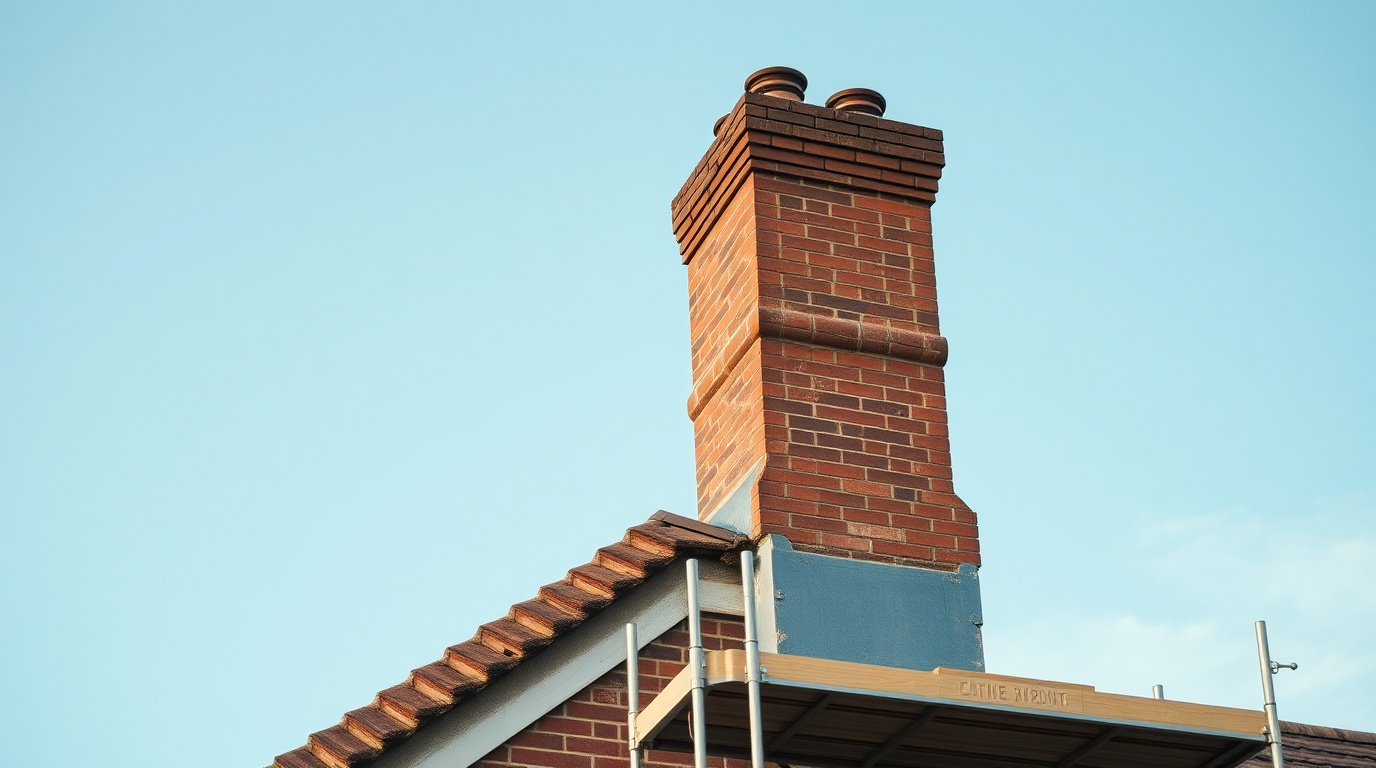
Repointing and rebuilding are often weighed against each other, but they fix different things — one renews the mortar, the other renews the masonry. Knowing which problem you actually have settles the choice.
Repoint vs rebuild
- Repoint fixesfailed mortar joints
- Rebuild fixesdamaged brick / movement
- Repoint suitssound brick, straight stack
- Rebuild suitsspalling, lean, loose brick
- Decidercondition of brick and stack
What repointing does and when it is enough
Repointing renews the mortar joints of a chimney. The old, soft, recessed or missing mortar is raked out to a sound depth and replaced with fresh mortar, restoring both the chimney's water seal and the bond between the bricks. It is the standard maintenance repair for a stack whose joints have weathered but whose brickwork is otherwise in good order.
Repointing is the right choice when the bricks are sound and the stack is straight and stable. If the only problem is that the mortar has perished — soft, crumbling, washing out as sand — and the bricks between the joints are solid with their faces intact, then renewing the mortar fixes the issue and gives a lasting result. It is the cheaper and less disruptive option, it preserves the original brickwork, and on a sound stack it can be expected to last many years. The critical condition is that repointing only works on good brick: it puts new mortar around the existing bricks but does nothing for bricks that are themselves failing.
When rebuilding is unavoidable
Repointing reaches its limit when the bricks or the structure have failed, because no amount of new mortar fixes those. A chimney needs rebuilding rather than repointing when: the bricks are extensively spalled, having lost their faces to frost; the bricks are loose or moving because the mortar has gone completely; the stack leans, bows or has shifted; or sulphate attack has broken the mortar down throughout the stack. In these situations the masonry can no longer be relied on, and trying to repoint around crumbling or loose brick simply hides a structure that is failing as a whole.
Rebuilding takes the affected section down — commonly the part above the roofline — and reconstructs it, reusing sound bricks where possible and renewing crown, flashing and pots in the same operation. It is more costly and disruptive than repointing, but it is the only way to restore a chimney whose brickwork or stability has gone. A practical sign you are past repointing is when a mason raking out the joints finds bricks moving or coming loose as the mortar is removed: that stack needs rebuilding, not repointing.
Comparing the options
The two repairs differ in what they fix, what they cost and how long they last. The table is an indicative comparison; the correct option depends on a close inspection of the brick and the stack.
| Factor | Repointing | Rebuilding |
|---|---|---|
| Fixes | failed mortar only | damaged brick and structure |
| Suits | sound brick, straight stack | spalling, movement, loose brick |
| Indicative cost | £500–£1,500 | £1,500–£5,000+ |
| Disruption | lower | higher, stack dismantled |
| Preserves original brick | yes | partly (sound bricks reused) |
Indicative figures for guidance; access and scope drive cost. Sources: Checkatrade / HomeOwners Alliance.
Making the decision
The way to decide is to look past the mortar to the brick and the stack. Ask three questions: are the bricks sound (faces intact, not spalled or loose), is the stack straight and stable, and is the mortar failure localised or throughout? If the bricks are good, the stack is true, and only the pointing has weathered, repoint — it is cheaper, less disruptive and preserves the original masonry. If the bricks are spalling or loose, the stack has moved, or the mortar has failed wholesale, rebuild the affected section, because repointing would be money spent propping up a structure that is failing. Because these conditions are hard to judge accurately from the ground, a specialist inspection at close range is the reliable basis for the choice — and the same visit can confirm whether a part-rebuild from the roofline is enough or the whole stack is involved. Where there is any sign of structural movement, that consideration outweighs the cost difference.
Frequently asked questions
Will repointing fix a crumbling chimney?
Only if the crumbling is in the mortar joints and the bricks themselves are sound. Repointing renews the mortar but cannot repair spalled or loose bricks. If the brickwork is failing as well as the mortar, the stack usually needs rebuilding instead.
How often does a chimney need repointing?
There is no fixed interval, as it depends on exposure, the original mortar and the weather. Many stacks go several decades between repointing, but exposed chimneys in wet, frost-prone areas weather faster. Periodic inspection after hard winters catches failing joints early.
Can you reuse the old bricks when rebuilding a chimney?
Often, yes. Where bricks are still sound, a rebuild commonly reuses them, which keeps the appearance consistent and reduces material cost. Spalled, cracked or crumbling bricks are replaced with matching frost-resistant brick during the rebuild.
Sources & further reading
- HomeOwners Alliance — chimney repair guidance
- Checkatrade — repointing and rebuild costs
- SPAB — repointing older masonry
Figures on this page are typical UK ranges drawn from published sources and depend on your specific chimney. They are guidance, not a quotation.