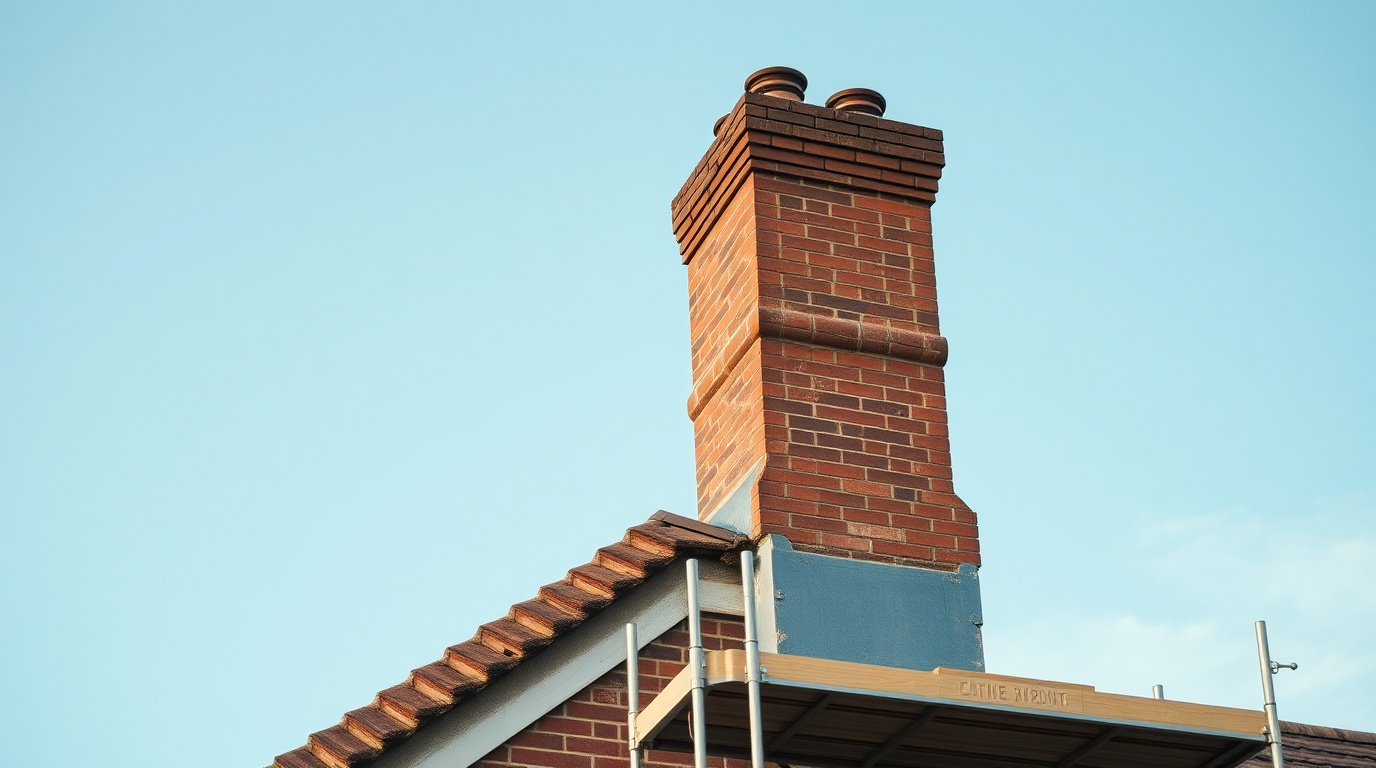
The short answer
Chimney spalling is the flaking, blistering or crumbling of brick faces on a chimney stack, caused mainly by frost action on water trapped inside the masonry. When brick absorbs rainwater and that water freezes, it expands and forces the outer surface off; repeated over UK winters, this freeze-thaw cycle erodes the brick. Spalling is made worse by perished pointing, a failed crown that lets water in, and impermeable cement renders or sealants that stop the wall drying. Repair means cutting out and replacing badly spalled bricks (or turning sound bricks face-in), repointing in a breathable mortar, and fixing the source of the water so it does not recur. Left untreated, spalling weakens the stack and can lead to a partial rebuild.
Spalling is one of the most visible chimney faults and one of the clearest signs that water has been getting into the masonry. The cure is as much about stopping the water as replacing the brick.
Spalling at a glance
- What it isbrick faces flaking off
- Main causefreeze-thaw on trapped water
- Made worse byfailed pointing or crown
- Repairreplace brick, repoint breathable
- Preventionkeep water out, let wall dry
What spalling is and why it happens
Spalling describes brickwork whose outer surface is flaking, blistering, crumbling or breaking away, leaving a rough, pitted or hollowed face. On a chimney it is common because the stack is the most weather-exposed masonry on the house, taking rain on every side with little shelter. The mechanism is the freeze-thaw cycle. Brick is mildly porous and absorbs rainwater; when the temperature drops below freezing, that water turns to ice and expands by roughly a tenth of its volume. The expanding ice pushes the saturated outer layer of the brick off. Through a typical British winter this can happen many times, and each cycle removes a little more material until the brick face is gone.
Some bricks resist this far better than others. Frost-resistant (F2 grade) facing bricks are designed for exposed positions; softer, more absorbent bricks — common on older chimneys or where a previous repair used the wrong brick — spall much sooner. The problem is rarely the brick alone, though. Spalling almost always sits alongside another defect that is letting in the water: perished or missing pointing, a cracked crown at the top, or a cement render or sealant trapping moisture behind an impermeable skin so it cannot dry and instead freezes within the wall.
How serious is it?
A few shallow spalled faces on an otherwise sound stack are mainly a maintenance matter, but spalling is progressive and should not be left. As bricks lose their faces, the wall thins and weakens, the joints open up, and more water gets in to drive further damage — a self-feeding cycle. Severe spalling can compromise the structural integrity of the stack, contributing to a lean or, in extreme neglect, to brick or masonry falling. Because the chimney sits high on the roof, falling debris is a genuine safety concern.
The internal consequences matter too. The same water that spalls the brick soaks the masonry, so a spalling stack often comes with a damp chimney breast, blown plaster and staining inside the house. Treating the spalling without addressing that water path simply lets the new brickwork start to fail in turn. The honest assessment, then, is that isolated early spalling is cheap to put right, but widespread spalling on a neglected stack can tip the balance towards rebuilding the top of the chimney rather than patching it.
How spalling is repaired
Repairing spalling is a two-part job: replace the damaged masonry and stop the water that caused it. Badly spalled bricks are cut out and replaced with matching frost-resistant bricks; where a brick has only spalled on the outer face but is otherwise sound, a bricklayer can sometimes reverse it, turning the good face outwards. Open or perished joints are then repointed, and on older or solid chimneys this should usually be done in a lime-based mortar rather than hard cement, so the joints stay softer and more breathable than the brick and let the wall dry. The water source is dealt with at the same time — a cracked crown is recast, failed flashing renewed, and any impermeable render or sealant that is trapping moisture removed where appropriate.
| Repair element | What is involved | Indicative cost range |
|---|---|---|
| Replace spalled bricks | cut out, match and rebuild faces | £400–£1,200+ |
| Repoint joints | rake out, repoint breathable mortar | £500–£1,500 |
| Recast crown | renew flaunching / crown | £250–£800 |
| Rebuild stack top | dismantle and rebuild courses | £1,000–£3,000+ |
Indicative figures for guidance; access and scaffold drive the final cost. Sources: Checkatrade / HomeOwners Alliance.
Preventing it coming back
Once the stack is repaired, keeping spalling away is about managing water, not coating the brick. Sound pointing, a watertight crown, well-dressed flashing and clear, capped pots all keep rain out of the masonry in the first place, and that is the most effective protection there is. On a wall that is sound but naturally absorbent, a breathable, vapour-permeable water-repellent can reduce how much rain the brick takes up while still letting trapped moisture escape — but it is a finishing touch on good masonry, never a substitute for repair, and it must never be the impermeable kind that seals moisture in. Using frost-resistant bricks for any replacement, and a breathable mortar for repointing, means the repaired section is better matched to the British climate than the failed original. Periodic inspection — a glance with binoculars after hard winters and storms — catches early spalling while it is still a small, inexpensive fix.
Frequently asked questions
Is spalling brickwork dangerous?
It can be if left. Severe spalling thins and weakens the stack, can contribute to a lean, and may lead to brick or masonry falling from a height. Early, isolated spalling is mainly a maintenance issue, but it is progressive and worsens if ignored.
Can spalled bricks be turned around instead of replaced?
Sometimes. If a brick has spalled only on its outer face but is otherwise sound and intact, a bricklayer can reverse it so the good face shows. Badly broken or crumbling bricks need cutting out and replacing with matching frost-resistant brick.
Why does sealing my chimney make spalling worse?
An impermeable sealant traps water that is already in the brick. With nowhere to escape, that water keeps freezing and expanding inside the masonry, breaking it apart from within. Only breathable repellents, applied to sound dry brick, are appropriate.
Sources & further reading
- HomeOwners Alliance — chimney repair guidance
- Checkatrade — chimney repair and repointing costs
- SPAB — repair of older masonry and lime mortar
Figures on this page are typical UK ranges drawn from published sources and depend on your specific chimney. They are guidance, not a quotation.